
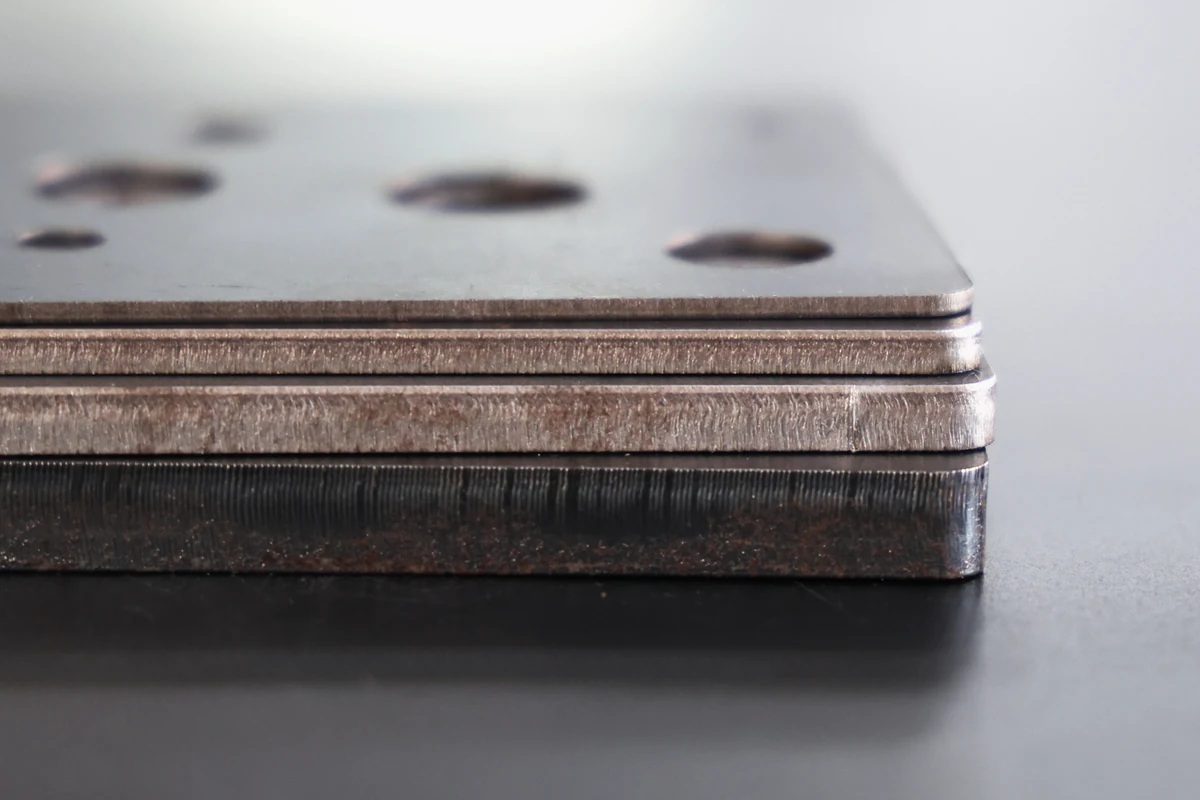
- Key Takeaways
- Which Steel Grades Can Be Laser Cut?
- How Thick of a Steel Sheet Can Be Laser Cut?
- Should You Use Oxygen or Nitrogen Assist Gas?
- What Tolerances and Edge Quality Can You Expect?
- How Flat Is a Laser Cut Steel Part?
- How Does Hot Rolled Differ from Cold Rolled Under a Laser?
- Can Galvanized Steel Be Laser Cut?
- What Is the Maximum Sheet Size for Laser Cut Steel?
- Which Design Rules Matter Most for Steel Parts?
- Which Finishes Pair With Laser Cut Steel?
- How to Order Laser Cut Steel Parts Online
- Frequently Asked Questions
Laser cut steel is produced on fiber lasers in thicknesses from 0.5 mm to 20.0 mm, held to linear tolerances of ±0.45 mm as standard or ±0.20 mm on high-precision work. At Komacut, carbon steel up to and including 6 mm is cut under nitrogen; above 6 mm we switch to oxygen.
That gas rule surprises people, because the usual advice is that oxygen is the fast, cheap option for mild steel and nitrogen is the premium upgrade. On our machines it runs the other way round below 6 mm. Cutting 6 mm Q235, nitrogen moves at 7 m/min against 3.4 m/min for oxygen. At that thickness nitrogen is simply the better cut, and you get an oxide-free edge as a side effect rather than as an upgrade.
This guide covers which grades each of our facilities stocks, how thick you can actually go, the edge quality and flatness we measure, the design rules that keep parts cutting clean, and how ordering works.
Key Takeaways
Fiber lasers cut steel to 20.0 mm, but the press brake stops at 10.0 mm. Thicker parts stay flat or become assemblies.
Carbon steel at or below 6 mm is cut under nitrogen, above 6 mm under oxygen. Below 6 mm nitrogen is roughly twice as fast, so it is the default rather than the upgrade.
Nitrogen-cut edges measure Ra 3.2–6.4 µm. Oxygen-cut edges at 10–20 mm measure Ra 6.4–12 µm and carry an oxide layer that has to come off before coating.
Deburring is applied by default. You do not need to specify it.
Our China facility runs metric sheet to 1,500 × 3,000 mm. Mexico stocks imperial, 1,219 × 3,048 mm (48 × 120 in), so check your flat pattern against the facility you are ordering from.
Table of Contents
- Which Steel Grades Can Be Laser Cut?
- How Thick of a Steel Sheet Can Be Laser Cut?
- Should You Use Oxygen or Nitrogen Assist Gas?
- What Tolerances and Edge Quality Can You Expect?
- How Flat Is a Laser Cut Steel Part?
- How Does Hot Rolled Differ from Cold Rolled Under a Laser?
- Can Galvanized Steel Be Laser Cut?
- What Is the Maximum Sheet Size for Laser Cut Steel?
- Which Design Rules Matter Most for Steel Parts?
- Which Finishes Pair With Laser Cut Steel?
- How to Order Laser Cut Steel Parts Online
- Frequently Asked Questions
Which Steel Grades Can Be Laser Cut?
Our Mexico facility works to ASTM designations and our China facility to GB and JIS, so the grade list depends on where the part is made. The platform only offers what that facility stocks.
| Grade | Type | Standard | Facility |
|---|---|---|---|
| A36 | Hot rolled | ASTM A36 | Mexico |
| A572 | Hot rolled | ASTM A1011 | Mexico |
| A366 | Cold rolled | ASTM A366 | Mexico |
| A715 | Cold rolled HSLA | ASTM A715 (withdrawn) | Mexico |
| Q235 | Hot rolled | GB/T 700-2006 | China |
| Q275 | Hot rolled | GB/T 700-2006 | China |
| Q355 | Hot rolled | GB/T 1591-2018 | China |
| #20 | Hot rolled | GB/20CrNiMo | China |
| SAPH440 | Hot rolled | Q/BQB 310-2009 | China |
| SPCC | Cold rolled | JIS G3141-2009 | China |
| SGCC | Hot-dip galvanized | JIS G3302 | Mexico and China |
| 65Mn | Spring steel | GB/T 1222-2007 | China |
A36 covers most structural work in North America: brackets, base plates, mounting feet, weldment components. A572 steps in when the load exceeds what A36 will carry. A366 and A715 are the cold-rolled choices where surface condition matters.
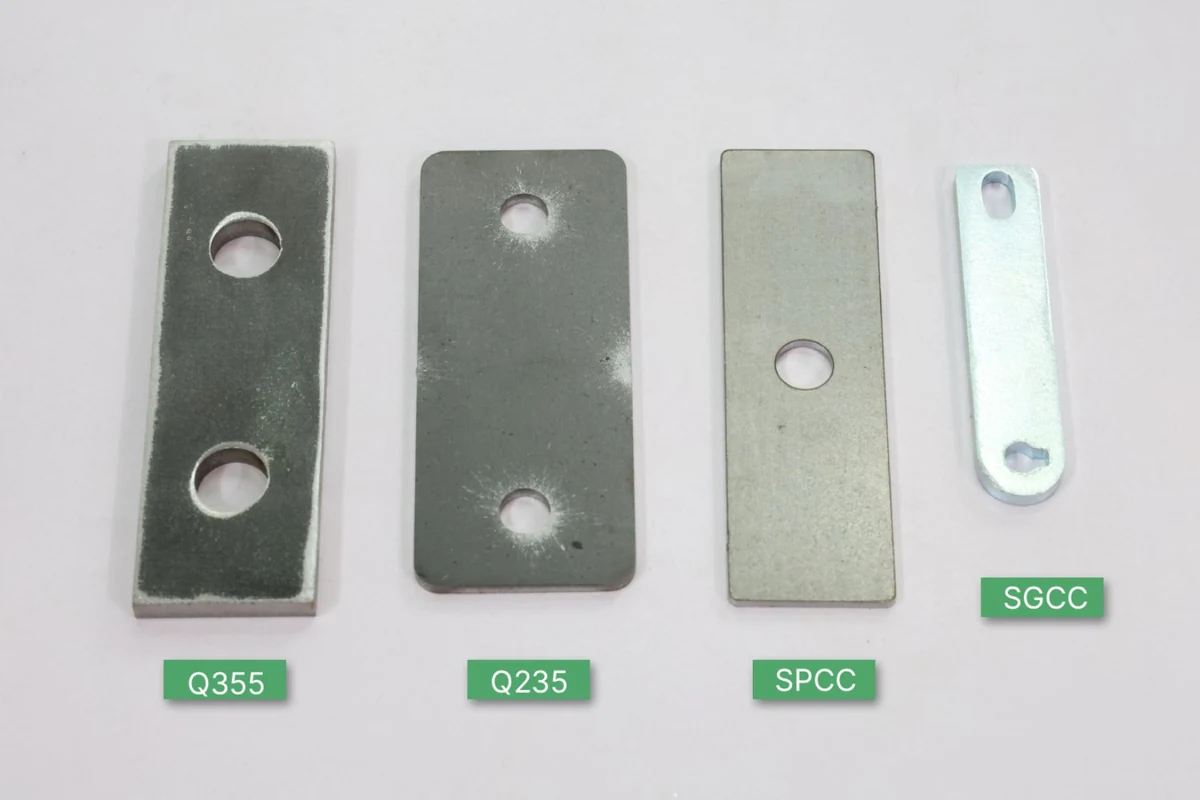
A715 needs a word of explanation, because it looks like an error on a materials list. ASTM withdrew the specification in 2000 and superseded it with A1011. It stays in circulation because tens of thousands of OEM part prints drafted before then still call it out, and reissuing a drawing to change a material callout is rarely worth anyone's time. So service centres and fabricators keep stocking and quoting to it. If you are drafting something new, specify A1011. If you are working from a legacy print, A715 will still be understood and supplied.
In China, Q235 is the everyday choice. Q355 comes in on higher-strength structural parts, SPCC on enclosure panels, SAPH440 on automotive bracketry, and SGCC where you want galvanized stock.
If your drawing specifies an ASTM grade but the part is made in China
You have to pick from the China list. The equivalences below are engineering substitutions based on comparable properties and common industry practice, not a jointly issued standard — there is no official China–US mapping document, and the two systems are independent.
| ASTM | GB / JIS equivalent | Notes |
|---|---|---|
| A36 / A36M | Q235B (GB/T 700-2006) | Closest structural match. |
| A572 Grade 50 | Q355B (GB/T 1591-2018) | Yield 345 vs 355 MPa. |
| A1008 CS Type B | SPCC (JIS G3141) | Commercial-quality cold rolled. |
| A653 CS Type B | SGCC (JIS G3302) | Hot-dip galvanized. |
If the substitution matters to your qualification or your customer's spec, say so on the RFQ rather than assuming it will be flagged.
How Thick of a Steel Sheet Can Be Laser Cut?
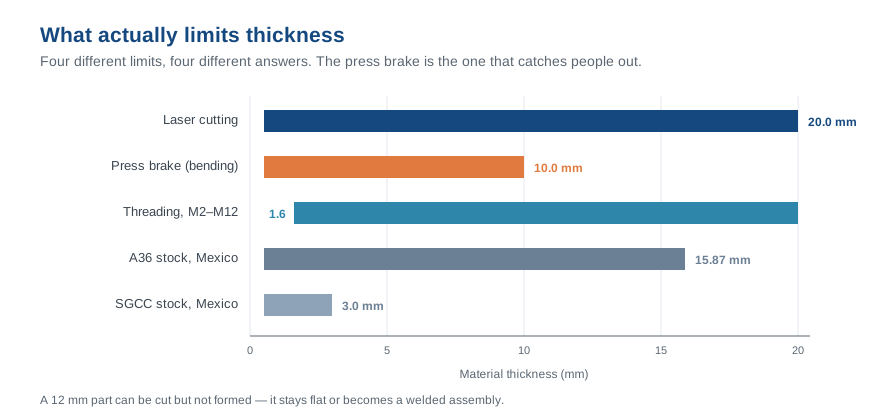
Our published limit is 20.0 mm, and that is the same maximum that applies to every metal we cut. If you have seen other figures quoted, it is usually because each one answers a different question.
- 20.0 mm is equipment capacity. Above it the machine will not take the job.
- 10.0 mm is the press brake limit. A 12 mm part can be cut but not formed, which makes it a flat part or an assembly. This is the constraint that catches people out most often.
- 15.87 mm (5/8 in) is the thickest A36 our Mexico facility stocks. Ordering thicker steel from North America means confirming availability first.
- 1.6 mm is the minimum for threading, M2 to M12 within a 400 × 400 mm unfolded envelope. Thinner sheet needs inserted hardware.
Plate arrives with a thickness spread already in it from the mill. The band we work to tightens as the sheet gets thinner:
Incoming sheet varies
| Nominal thickness | Standard thickness tolerance |
|---|---|
| 0.5 – 2.0 mm | ±0.05 mm |
| 2.0 – 5.0 mm | ±0.10 mm |
| 5.0 – 10.0 mm | ±0.25 mm |
| 10.0 – 20.0 mm | ±0.50 mm |
At the thick end that means a 12 mm plate can arrive anywhere between 11.5 mm and 12.5 mm and still be in spec. Design the stack-up around the band, not the nominal figure.
In practice Q235 usually lands tighter than the generic band. The material-specific chart in our sheet metal tolerances guide puts 10.00–12.50 mm stock at ±0.40 mm on 1,200–1,500 mm wide sheet, so a 12 mm plate more often measures 11.60 to 12.40 mm. Use ±0.50 mm when you need a number you can hold us to, and the Q235 chart when you are estimating what will actually turn up.
Should You Use Oxygen or Nitrogen Assist Gas?
For carbon steel the answer is thickness, not application. At or below 6 mm we cut under nitrogen. Above 6 mm we cut under oxygen. Stainless and aluminium are nitrogen throughout.
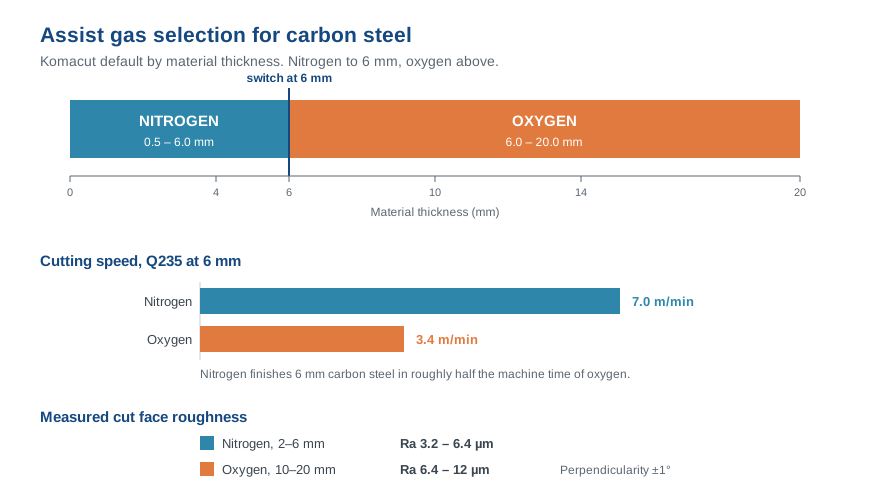
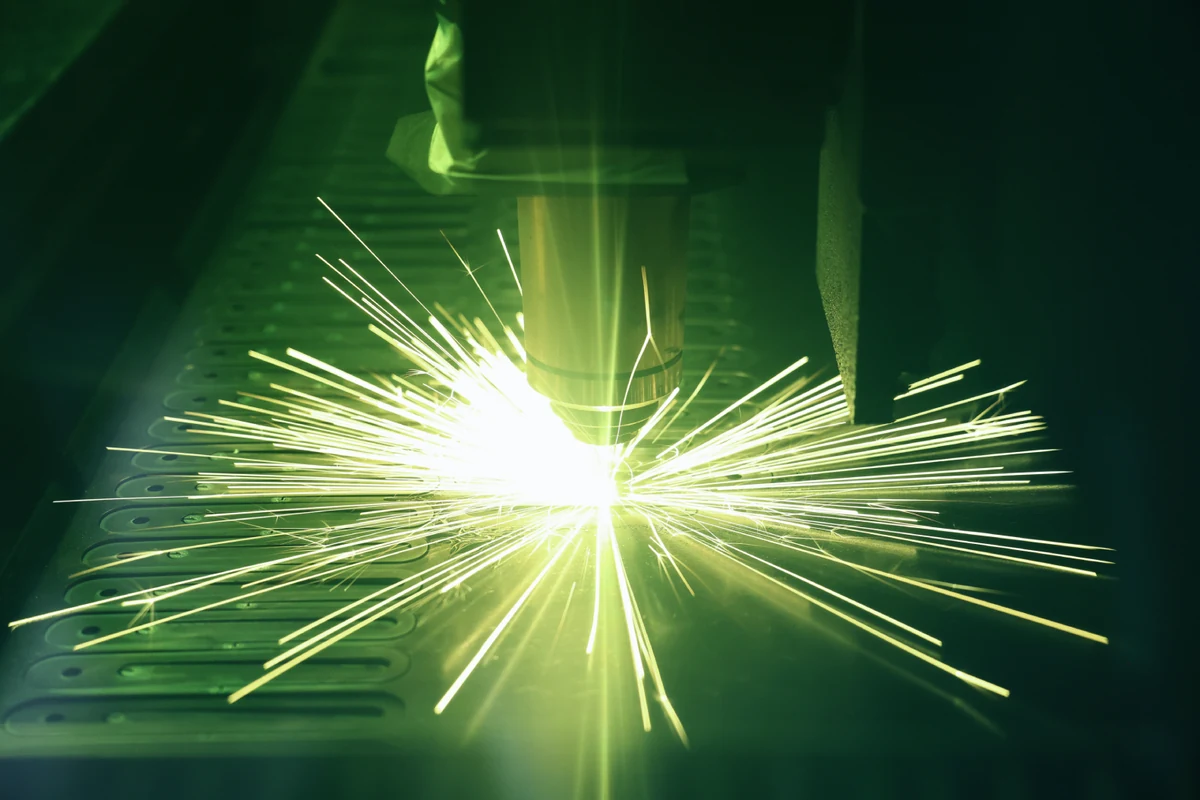
The reasoning is not the one you will read in most guides, including our own older material on the laser cutting process. The general rule — oxygen is the fast option on mild steel, nitrogen the slower premium one — holds on lower-power machines. On an 8 kW or 12 kW fiber it stops holding below 6 mm. Oxygen reacts with the iron and releases its own heat into the cut front, so on heavy plate more energy reaches the cut than the laser alone supplies, and that is why it takes over above 6 mm. On thinner material the laser does not need that help, and nitrogen's higher pressure clears the kerf faster.
| Q235 at 6 mm | Nitrogen | Oxygen |
|---|---|---|
| Cutting speed | 7 m/min | 3.4 m/min |
| Cut face | Bright, oxide-free | Thin oxidized skin |
| Heat affected zone | Under 0.1 mm | ≤0.2 mm machining allowance |
Two things follow from that table. Nitrogen finishes the part in half the machine time at 6 mm and under, so it is not the slow option most guides assume it to be. And because the edge comes off bright, a part heading for powder coat or e-coat needs no descaling step.
Above 6 mm you get the oxidized skin whether you want it or not, and it has to come off before paint, powder or adhesive. If you leave it on, the coating will not hold. Budget for that when you are specifying a finish on 8 mm plate and up.
For how piercing, nesting and gas selection work across materials, see understanding the laser cutting process.
What Tolerances and Edge Quality Can You Expect?
Tolerances here are set by the cutting process rather than by steel specifically, so the same ranges apply to aluminium and stainless.
| Spec | Standard | High precision |
|---|---|---|
| Linear tolerance | ±0.45 mm | ±0.20 mm |
| Hole diameter tolerance | ±0.12 mm | ±0.08 mm |
| Bend angle | ±1.0° | ±0.5° |
Treat those as the process capability rather than a flat guarantee at every thickness. Our engineering team's position is that ±0.45 mm does not apply uniformly from 0.5 mm to 20 mm — on heavier plate the material's own thickness tolerance and a small amount of cut taper stack on top of the cutting tolerance. For a critical dimension on 10 mm plate and up, confirm it at RFQ rather than assuming the standard figure holds.
Edge quality is a different measurement again. Across our own cutting records, roughness on the cut face runs:
- Nitrogen, 2–6 mm: surface roughness Ra 3.2–6.4 µm
- Oxygen, 10–20 mm: surface roughness Ra 6.4–12 µm
- Perpendicularity: ±1° across the range
Those are Ra values, the average-roughness parameter we use throughout — see our guide to surface roughness for how Ra and Rz differ. A nitrogen-cut edge at Ra 3.2–6.4 µm sits inside the 1.6–6.3 µm band where surface texture actively helps paint and powder adhere, which is a second reason those parts go straight to coating.
Read that as thickness and gas together rather than gas alone — we cut thin under nitrogen and thick under oxygen, so the two move as a pair on our machines and the figures cannot be separated out.
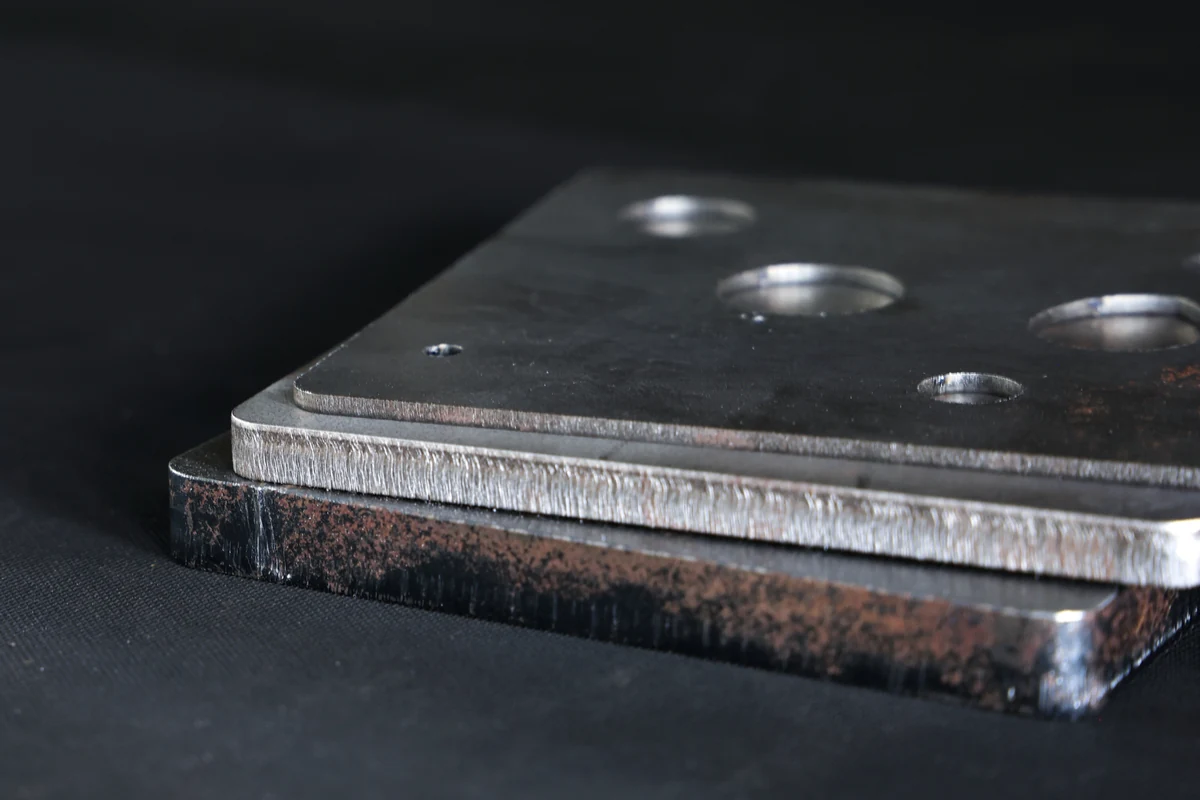
Striations deepen and dross gets heavier as plate gets thicker, and there is a small crater at the pierce point. None of that is a defect — it is what a thermal cut looks like.
Writing 'clean edge, no burrs' on a drawing gives the manufacturer nothing measurable. ISO 9013:2017 classifies thermal cuts by perpendicularity and surface roughness, and it is the right thing to reference if the cut face has to meet a defined quality. We can hold a specified class where the drawing calls for it.
On burrs: deburring is applied by default, so you do not need to ask for it. Where slat wear or nozzle spatter goes against us, burr height on an untreated laser cut edge can reach about 1 mm — worth knowing if you are ever quoting a part elsewhere and deburring is priced separately.
For the full picture see our guide to sheet metal tolerances and our explanation of what kerf means in laser cutting, which is a separate value from tolerance and one you should not compensate for yourself.
How Flat Is a Laser Cut Steel Part?
Flatness is the specification most fabricators leave undefined, and it is the one that disrupts the next operation when a part will not sit down in a fixture. We control it against the part's longest side and its thickness. For Q235 and Q355:
| Thickness | ≤10 mm side | 10–30 | 30–100 | 100–300 | 300–1,000 | 1,000–3,000 |
|---|---|---|---|---|---|---|
| ≤3.0 mm | 0.15 | 0.20 | 0.30 | 0.80 | 2.0 | 5.0 |
| 3.0–6.0 mm | 0.12 | 0.18 | 0.25 | 0.60 | 1.5 | 4.0 |
| >6.0 mm | 0.10 | 0.15 | 0.20 | 0.50 | 1.2 | 3.5 |
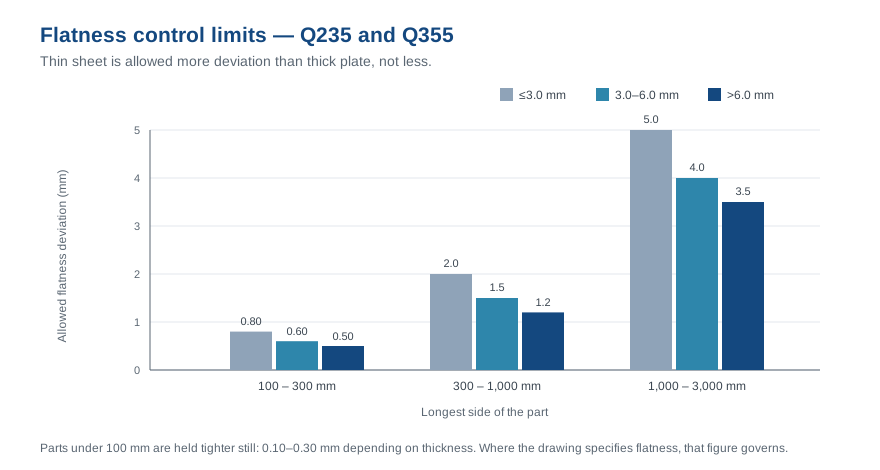
All figures in mm. Note which way the table runs: thin sheet is allowed more deviation, not less. Laser heat goes into a 2 mm panel and has nowhere to spread, so it distorts more readily than a 10 mm plate of the same footprint. If you have been assuming thin parts come out flatter, they do not.
Warping during cutting is stress relieving itself, and it is why a densely nested part in thin sheet can lift off the table. Parts are checked on a granite surface plate with a feeler gauge — first-off confirmed before the run, then three to five parts per sheet during unloading, with anything out of tolerance tagged and segregated.
Where a flatness requirement is on the drawing, we work to that instead. If nothing is specified, the table above is what you get.
How Does Hot Rolled Differ from Cold Rolled Under a Laser?
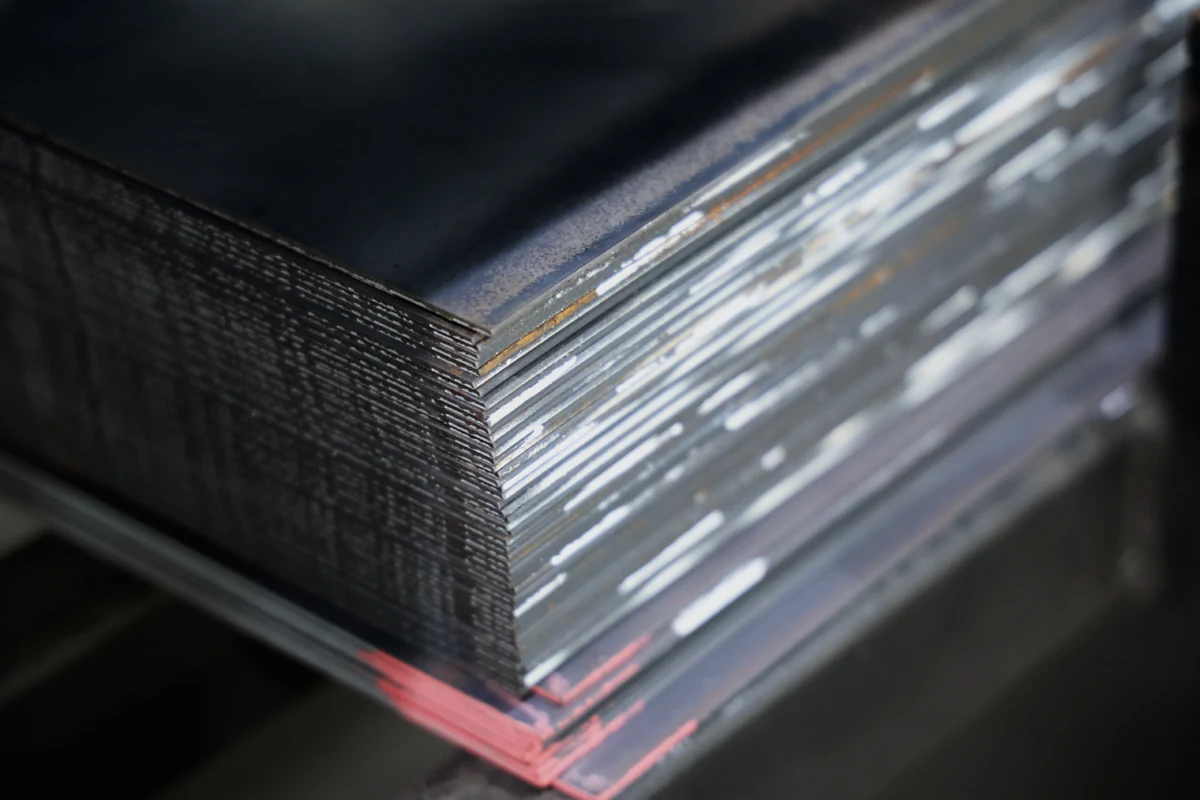
Mill scale is the difference that shows. Hot rolled steel carries a dark iron oxide layer from the rolling process, and its thickness and adhesion vary across the sheet, so the laser works through it on every pierce. That makes piercing less consistent and throws more spatter around the entry point.
Welded into an assembly, none of that matters. On a visible panel it does. Cold rolled steel has a cleaner surface and tighter thickness consistency, which makes piercing more predictable and gives coatings a better surface to key into.
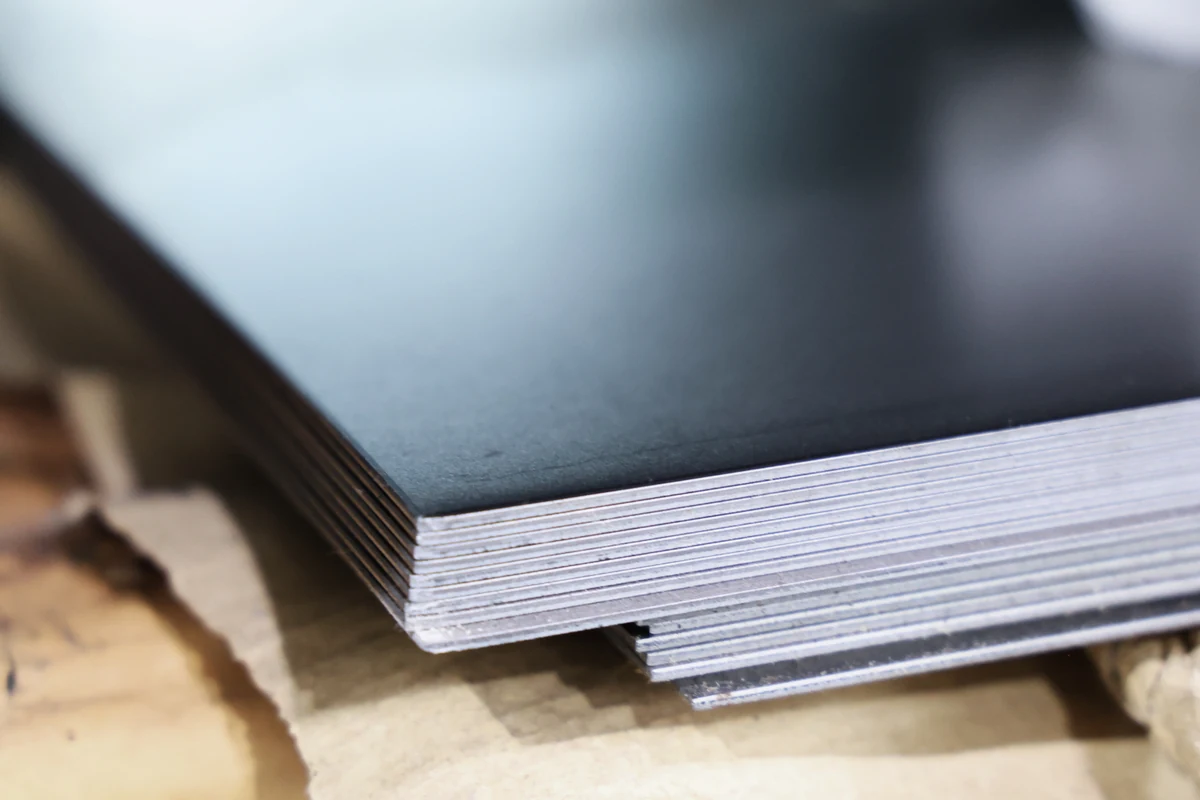
So: cold rolled for anything visible or finished, hot rolled for anything buried inside an assembly where the surface is never seen and the cost saving is real.
Can Galvanized Steel Be Laser Cut?
Yes. SGCC cuts without difficulty, and we stock it at both facilities. The questions worth asking are about what happens after the cut.
Zinc vaporises at around 907 °C, well below the melting point of steel, so the coating burns off ahead of the beam and produces zinc oxide fume. That is handled by extraction at the machine.
The cut edge itself is less of a problem than it is usually made out to be. Our Mexico facility stocks SGCC from 0.5 mm to 3.0 mm, which puts every galvanized part there under the 6 mm nitrogen threshold, and zinc burn-back on a nitrogen-cut edge is negligible. Zinc is also sacrificial, so it protects the narrow strip of bare steel at the edge rather than leaving it defenceless. For an outdoor part in a corrosive environment it is still worth specifying a finish, but a bare cut edge on an indoor part is not the failure point it gets described as.
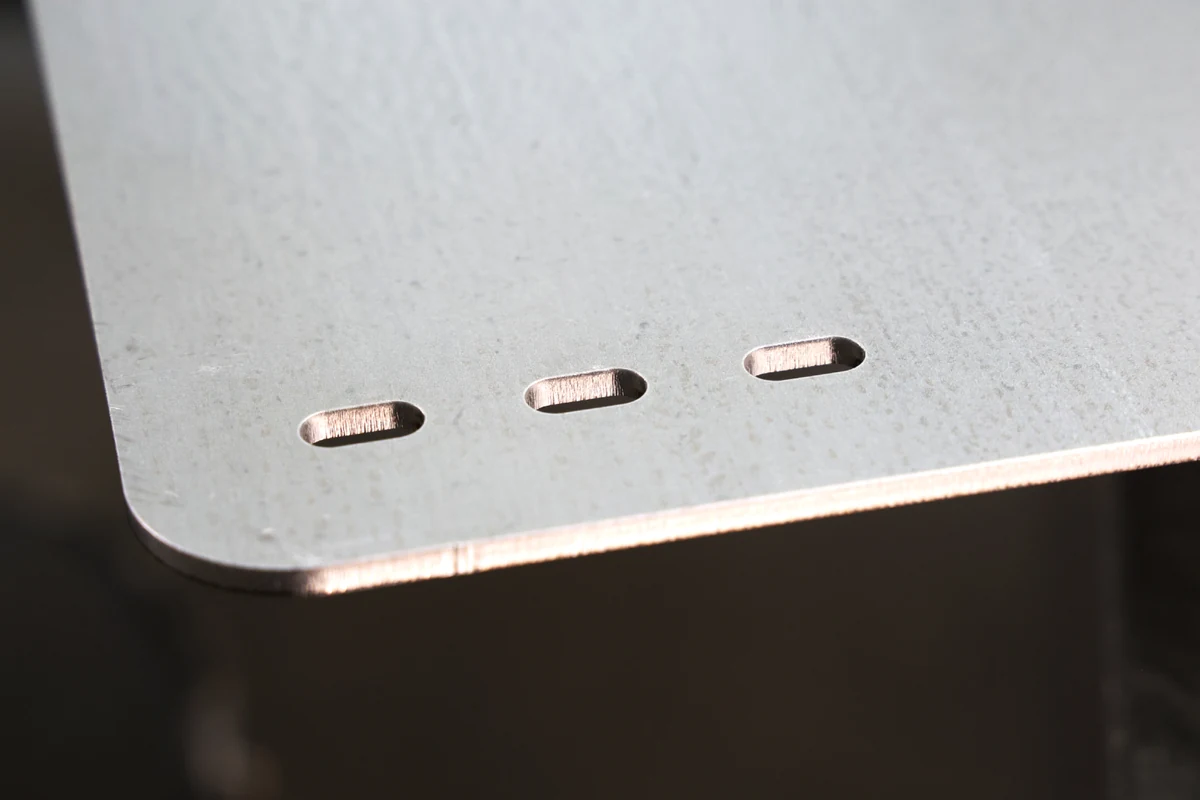
Coating adhesion is handled too. Pretreatment before powder coating is part of the standard process, not an extra you have to request. Galvanneal — zinc and iron alloyed during production, which gives powder coat a better key — exists on the market but in a narrow range of thicknesses, so ask before you design around it.
What Is the Maximum Sheet Size for Laser Cut Steel?
This is where the two facilities diverge, and it is the detail most likely to invalidate a design. China runs metric stock. Mexico runs imperial.
| Facility | Material | Maximum sheet size |
|---|---|---|
| China | Q235 / Q355 | 1,500 × 3,000 mm |
| China | SAPH440 | 1,260 × 2,500 mm |
| China | SPCC | 1,250 × 2,500 mm |
| China | SGCC | 1,250 × 2,500 mm |
| Mexico | A36, A572, A715, SGCC | 1,219 × 3,048 mm (48 × 120 in) |
| Mexico | A366 | 1,219 × 3,048 mm, some 1,524 mm (60 in) wide |
Check the flat pattern, not the folded part. A bracket that looks compact when formed can unfold past 1,250 mm and rule out SPCC. And a design that fits comfortably on Chinese Q235 at 1,500 mm wide will not fit Mexican stock at 1,219 mm — if you are dual-sourcing between the two facilities, size to the narrower one. Where a part genuinely will not fit, plan the split into the design early rather than working around it later.
Which Design Rules Matter Most for Steel Parts?
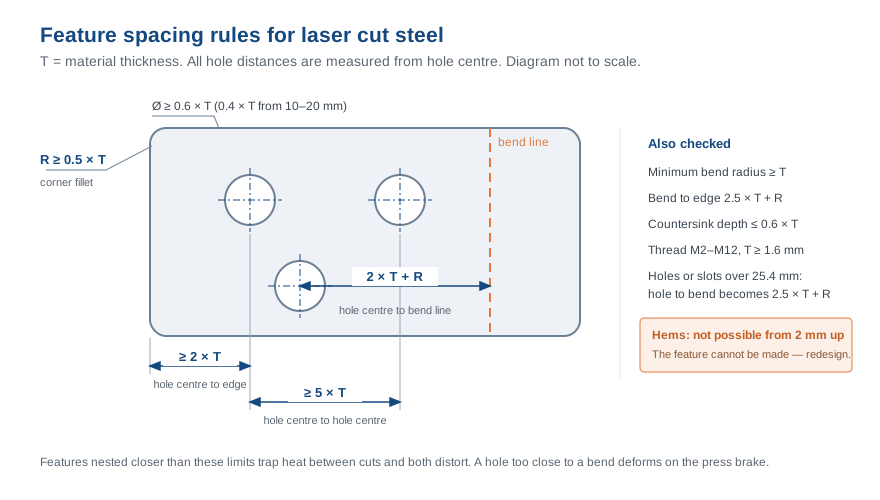
These are the rules our platform checks your file against, so a design that respects them quotes without an engineering query.
| Feature | Rule |
|---|---|
| Minimum hole size | 0.6 × thickness from 0.5–10 mm; 0.4 × thickness from 10–20 mm |
| Hole to hole | ≥ 5 × thickness, measured centre to centre |
| Hole to edge | ≥ 2 × thickness, measured from hole centre |
| Hole to bend | 2 × thickness + bend radius, hole centre to bend line; 2.5 × T + R for holes or slots over 25.4 mm |
| Minimum bend radius | ≥ material thickness |
| Bend to edge | 2.5 × thickness + bend radius |
| Corner fillets | ≥ 0.5 × thickness (tighter is possible but comes out sharp) |
| Countersink depth | ≤ 0.6 × thickness, at 30°, 45° or 60° |
| Hems | Not possible from 2 mm thickness up |
One thing worth being explicit about, because fabricators differ on it: every hole distance above is measured from the hole centre, not from the hole edge. Spacing to the edge of the hole would put your features further apart than we need them.
That last row saves more RFQs than any of the others. If your part has a hem and the material is 2 mm or thicker, it is not a tolerance conversation — the feature cannot be made, and the design needs to change before you quote it.
Feature spacing exists because of heat. Put two cuts too close together and the heat from the first is still in the material when the second starts, and both distort. The same applies to a hole sitting too close to a bend line, which deforms when the part goes through the press brake. Steel carries heat away more slowly than aluminium, which is why the spacing rules are looser here than they would be on a 5052 panel — but 5 × T is the floor, not a target.
Small features in thick plate are the other recurring problem. A detail that cuts cleanly in 2 mm becomes marginal in 12 mm. Narrow tabs, fine webs and tight internal corners all get harder as the plate gets heavier. And internal corners need a radius at all — the laser has a physical spot size and cannot produce a true zero-radius corner, so a sharp point on the drawing creates a mismatch at inspection.
For more on geometry limits, see our guide to designing laser cut parts.
Which Finishes Pair With Laser Cut Steel?
| Finish | Thickness | Corrosion resistance | Maximum part size |
|---|---|---|---|
| Powder coating | 70–150 µm | 480–1,000 h neutral salt spray | 2,400 × 1,800 × 1,200 mm |
| E-coating | 10–25 µm | 96 h neutral salt spray | 1,500 × 600 × 300 mm |
| Zinc plating | 5–25 µm | 48–96 h neutral salt spray | 1,200 × 400 × 400 mm |
| Rust preventive oil | — | 24 h neutral salt spray | — |
Watch the size column rather than the coating column. E-coating covers recesses, internal corners and welded joints that a spray gun reaches unevenly, and it holds film thickness around edges — but its envelope is 600 mm wide against 1,800 mm for powder coating. A part that powder coats comfortably may be a third too wide to e-coat, and that is a constraint people discover late.
Powder coating needs a clean, oxide-free surface to bond. Nitrogen-cut edges go straight into coating. Oxygen-cut edges — anything over 6 mm — need the oxide removed first, or the coating fails.
Rust preventive oil is the one people forget. It is not a finish in the decorative sense, it is what stops bare carbon steel corroding in transit and storage before the next operation. If your part is going straight into further processing, it is the right specification.
See our surface finishing page for the full range, or our metal materials page for current stock and properties.
How to Order Laser Cut Steel Parts Online
Upload a 3D file in STP, STEP or SLDPRT format and the platform prices it in about 30 seconds. SolidWorks files need to be version 2024 or earlier. The same upload runs a DFM check against the rules in the table above, so holes too close to a bend, a flat pattern that exceeds the available sheet, or a thickness over 20 mm get flagged before you order rather than after.
Lead time is your choice at checkout, and it is the same at both facilities:
| Option | Manufacturing lead time |
|---|---|
| Standard | 15 business days |
| Expedite | 10 business days |
| Express | 7 business days |
| Very Fast | 4 business days |
There is no minimum order quantity, so the process is the same for one prototype or a 2,000-piece run. Cutting, bending, threading and surface finishing go on one order — a Q235 enclosure panel arrives cut, formed, threaded and coated without moving between suppliers.
Instant DFM Checking
Get Instant Quote
Upload your CAD file for pricing in about 30 seconds, with DFM feedback on every part.
Frequently Asked Questions
How thick can steel be laser cut?
Steel can be laser cut from 0.5 mm to 20.0 mm on our fiber lasers. The practical limit is often lower: the press brake stops at 10.0 mm, so anything thicker stays a flat part or becomes a welded assembly. Our Mexico facility stocks A36 to 15.87 mm (5/8 in).
Should steel be cut with oxygen or nitrogen?
Carbon steel at or below 6 mm is cut with nitrogen, and above 6 mm with oxygen. Below 6 mm nitrogen is about twice as fast (7 m/min against 3.4 m/min at 6 mm), and it leaves a bright edge that needs no descaling before coating.
What edge quality does laser cut steel have?
Nitrogen-cut steel from 2–6 mm measures Ra 3.2–6.4 µm surface roughness. Oxygen-cut steel from 10–20 mm measures Ra 6.4–12 µm. Perpendicularity is held to ±1°. Reference ISO 9013:2017 on your drawing if the cut face has to meet a defined quality class.
Does laser cutting warp steel?
Some distortion is unavoidable, and thin sheet distorts more than thick plate. For Q235 under 3 mm with a 300–1,000 mm longest side, flatness is controlled to 2.0 mm; above 6 mm the same part is held to 1.2 mm. Parts are checked on a granite plate with a feeler gauge.
Do laser cut steel parts come deburred?
Yes. Deburring is applied by default, so it does not need to be specified. On an untreated laser cut edge, burr height can reach about 1 mm where slat wear or nozzle spatter goes against the cut, which is why the operation is standard rather than optional.
Can galvanized steel be laser cut?
Yes. SGCC is stocked to 3.0 mm, so every galvanized part falls under the 6 mm nitrogen threshold and zinc burn-back at the cut edge is negligible. Zinc protects the bare edge sacrificially. Pretreatment before powder coating is part of the standard process.