
- Key Takeaways
- Should You Laser Cut Aluminum at All?
- Aluminum or Steel for Laser Cutting: What's the Trade-off?
- Why Is Aluminum Harder to Laser Cut Than Steel?
- Which Aluminum Grades Laser Cut Well?
- How Thick of an Aluminum Sheet Can Be Laser Cut?
- What Tolerances and Edge Quality Can You Expect with Laser Cut Aluminum?
- What Is the Maximum Sheet Size for Laser Cut Aluminum?
- Laser Cutting Design Rules That Change With Aluminum
- Can You Anodize Laser Cut Aluminum?
- How to Order Custom Laser Cut Aluminum Parts
- FAQ
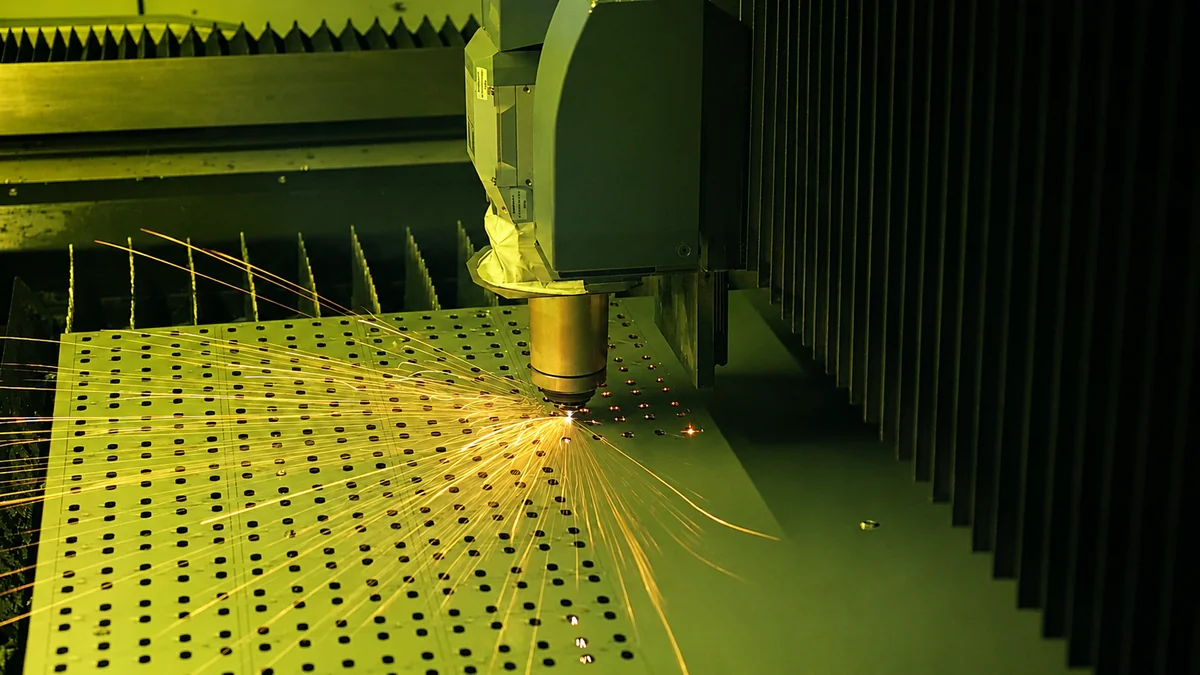
Laser cut aluminum is produced with fiber lasers using nitrogen assist gas. It accommodates materials up to about 20 mm in thickness, with linear tolerances near ±0.45 mm, or ±0.20 mm for high precision equipment.
The major difference between steel and aluminum for laser cutting comes down to reflectivity. Aluminum reflects laser energy, while steel absorbs it. It also conducts heat away from the cut zone about ten times faster than stainless steel does.
This guide covers laser cutting applications, how different materials change the process, how thick you can cut aluminum, and various design considerations to keep in mind when planning out your part.
The figures used in this post are Komacut’s published capability, so you can check your design against real numbers instead of generic industry ranges.
But first, we’ll start by figuring out if you should be laser cutting to begin with.
Key Takeaways
Fiber laser machines are able to cut aluminum sheets up to 20 mm in thickness.
Aluminum is more reflective than steel, which makes it more challenging to cut cleanly.
Laser cutting thin aluminum is fast and cost-effective, but waterjet cutting is generally better for thicker sheets.
Aluminum grades with lower heat conductivity tend to be easier to cut using a laser, except 7075-T6 aluminum, which has low conductivity but its zinc and copper content make it more prone to cracking.
Table of Contents
- Should You Laser Cut Aluminum at All?
- Aluminum or Steel for Laser Cutting: What’s the Trade-off?
- Why Is Aluminum Harder to Laser Cut Than Steel?
- Which Aluminum Grades Laser Cut Well?
- How Thick of an Aluminum Sheet Can Be Laser Cut?
- What Tolerances and Edge Quality Can You Expect with Laser Cut Aluminum?
- What Is the Maximum Sheet Size for Laser Cut Aluminum?
- Laser Cutting Design Rules That Change With Aluminum
- Can You Anodize Laser Cut Aluminum?
- How to Order Custom Laser Cut Aluminum Parts
- Frequently Asked Questions
Should You Laser Cut Aluminum at All?
For sheet aluminum under 6 mm, laser cutting is a great method.
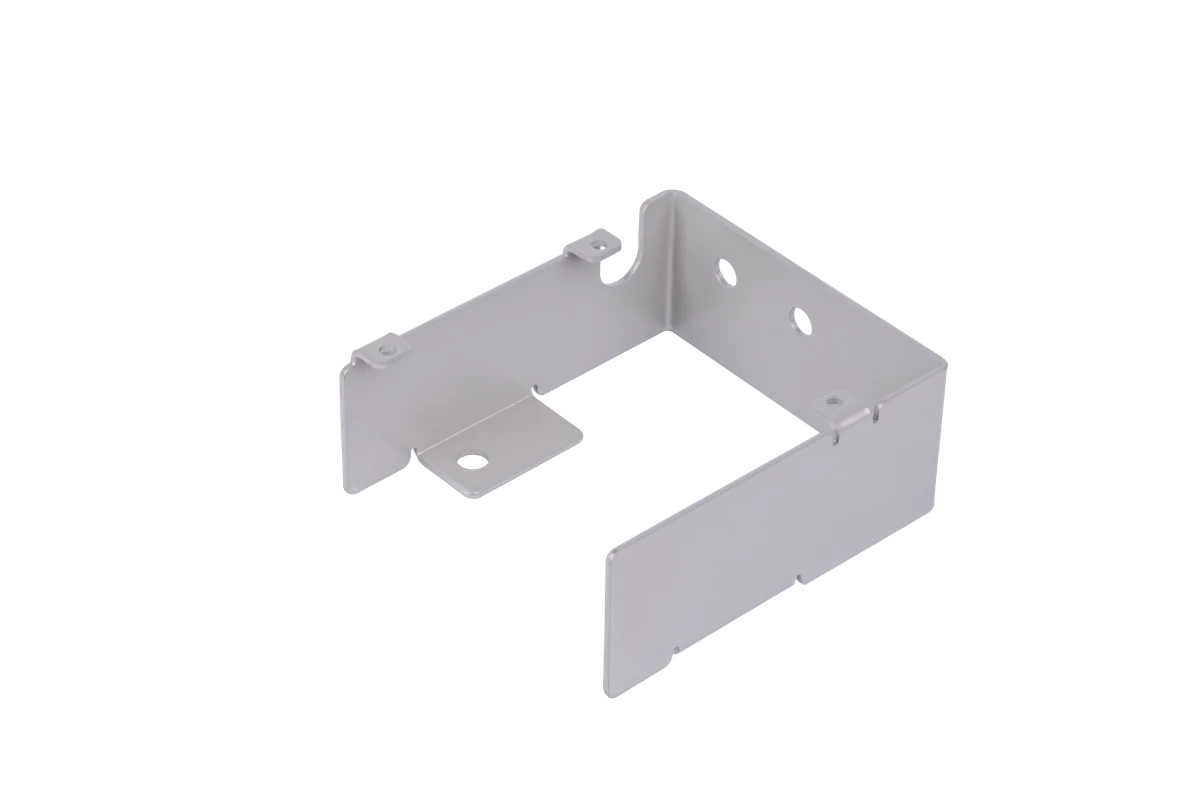
With a 6 kW fiber laser, you can run aluminum at 10–18 m/min. But abrasive waterjet can cut at 0.6–0.8 m/min (as the waterjet machine builder Finepart shows). That’s twenty times the throughput for laser, which means a lower cost per part on thin aluminum.
But machine time is only one aspect of the final quote. Our page on understanding laser cutting prices has a breakdown of the other elements.
Here’s a table that explains which aluminum cutting methods are best for different scenarios:
| Process | When It’s Ideal for Aluminum | Downsides |
|---|---|---|
| Fiber Laser | Sheets up to 20 mm (but the strongest cost advantages are with sheets under ~6 mm), prototype through production volume, complex profiles, and hole patterns. | Creates a narrow heat-affected zone at the cut edge; dross risk grows with added thickness. |
| Abrasive Waterjet | Thick plate, heat-sensitive tempers, or parts where the edge microstructure matters. | Slow, higher cost per part, 0.5–1° taper per side on the cut face. |
| Turret Punching | Simple repeated hole patterns at high annual volume, 0.5–6.4 mm thickness, plus formed features like louvers. | Higher tooling cost and lead time (poor fit for changing geometry or low volume). |
The big advantage of using waterjet is that it’s a cold cutting method. Unlike laser cutting, it won’t produce a heat-affected zone at all. This matters if your part is a heat-treated temper that you can’t afford to soften locally, or if the edge microstructure factors into your fatigue calculations. But using waterjet on a thin sheet of aluminum that doesn’t need to meet those specifications will just increase your lead time with no benefit.
Komacut manufactures parts using fiber lasers and press brakes, not waterjets or turret punch presses. If your part would do better being cut with waterjet, getting a quote from a different manufacturer would be your best option.
Aluminum or Steel for Laser Cutting: What’s the Trade-off?
Engineers often choose aluminum for its lighter weight, but pay for it with reduced stiffness.
Here’s a comparison of how your choice of steel or aluminum might affect your part:
| Property | 6061-T6 Aluminum | Mild Steel | How It Affects Your Part |
|---|---|---|---|
| Density | ~2.70 g/cm³ | ~7.85 g/cm³ | Aluminum weighs about a third as much. |
| Elastic Modulus | ~69 GPa | ~200 GPa | Same-gauge aluminum deflects nearly three times more. |
| Yield Strength | ≥276 MPa | ≥250 MPa (A36) | Aluminum is slightly stronger. |
| Max Laser Sheet | 1,220 × 2,440 mm | 1,500 × 3,000 mm | Large flat patterns may not fit in aluminum. |
The yield figures come from Komacut’s published metal materials table, while the density and modulus values are standard reference values for the alloy families.
Stiffness is the variable that can end up costing you. To regain the stiffness you lose by using aluminum, you may need to step up a gauge or add ribs and bends. This will add weight and move you up a thickness band on tolerance.
The better solution is to design the stiffness into the part’s geometry instead of relying on a thicker sheet. That way, the part will perform as needed and you can keep the weight advantage. So avoid features like long unsupported spans in flat 1.5 mm aluminum, because those will oil-can and nothing you can do with the cutting process will fix that.
You may also be surprised by the strength values. Contrary to many people’s assumptions, 6061-T6 aluminum is slightly stronger than common structural mild steel. That’s why it’s often used in brackets and frames.
Steel’s real advantage is its lower cost per kilogram and larger sheet size.
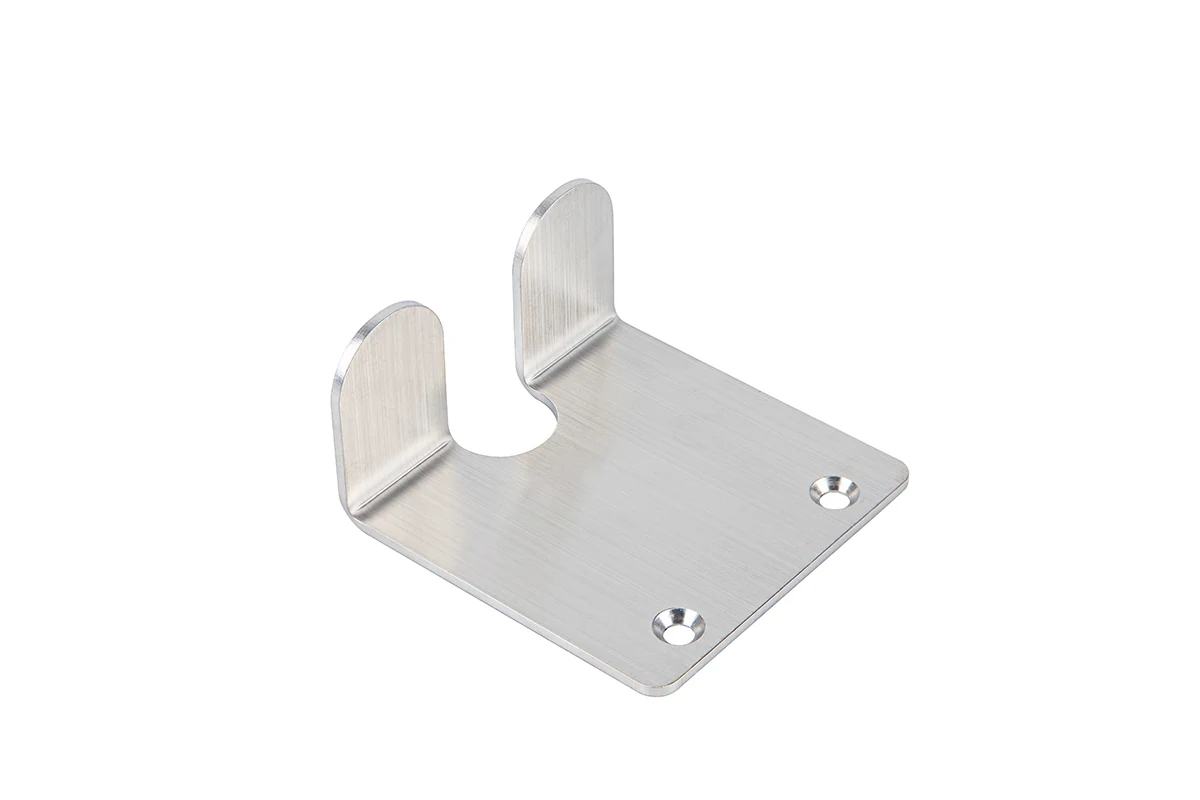
If you’re comparing specific steel grades against aluminum, our guide to carbon steel material selection will help you make that choice.
Why Is Aluminum Harder to Laser Cut Than Steel?
Laser cutting aluminum is harder because the material reflects more laser energy and conducts more heat.
Reflectivity
Aluminum reflects a large share of incident laser energy. That’s what made it so awkward to cut using the CO2 lasers that used to be ubiquitous in fabrication. Fiber lasers emit near 1.07 µm instead of CO2’s 10.6 µm, and aluminum absorbs that shorter wavelength far better. As The Fabricator notes, that difference is why fiber lasers replaced CO2 for nonferrous cutting.
If a supplier is quoting your aluminum part on a CO2 laser, ask why, and price it against one running fiber.
Conductivity
Most aluminum cutting defects have to do with the material’s thermal properties. A 6061-T6 grade aluminum sheet will conduct heat at about 167 W/m·K, compared to roughly 16 W/m·K for 304 stainless steel. So energy spreads out of the cut zone and into the surrounding sheet about ten times faster with aluminum, which will cause the molten material to cool before the gas jet can clear it. This can cause dross, and it’s why thick aluminum is harder to cut cleanly than thick steel. It’s also why aluminum is less forgiving of a badly matched feed rate than steel.
Assist Gas
Aluminum is cut under nitrogen as the assist gas. Because nitrogen is inert, it doesn’t cause an oxide layer to form on the cut face. The edge comes out bright and takes paint, powder coat, or anodizing with no need for an extra descaling step.
Steel typically gets cut with oxygen as the assist gas. This leaves an oxide layer that needs to be removed before finishing.
To see how piercing, nesting, and gas selection work across different materials, see our page on understanding the laser cutting process.
Which Aluminum Grades Laser Cut Well?
Higher conductivity results in more dross, so the grades with lower conductivity tend to cut better.
The following conductivity figures come from producer and standards data for 1060, 6061 and 5052, 6063-T5 and 7075-T6:
| Aluminum Grade | Conductivity (W/m·K) | How It Cuts | North America (Mexico) | China |
|---|---|---|---|---|
| 6061-T6 | ~167 | Cuts well, needs tighter focus control. | Stocked | Stocked |
| 5052-H32 | ~138 | Most forgiving. | Stocked | Stocked |
| 1060 | ~234 | Softest, prone to dross. | Not stocked | Stocked |
| 6063-T5 | ~209 | Suitable, but high risk for dross. | Not stocked | Stocked |
| 7075-T6 | ~130–150 | Limited due to hot cracking and HAZ risk. | Not stocked | Stocked |
7075-T6 aluminum is the exception to the rule. It has the lowest conductivity of the five grades, but its chemistry introduces a higher risk of defects (more on that below).
Technically, none of these grades are hard to cut. Some simply require more fine-tuning of parameters to produce a clean edge.
Parts routed through the Mexico facility ship USMCA duty-free into the U.S. and Canada. In practice, that makes 6061-T6 or 5052-H32 the better choice. These two grades cover most brackets, enclosures, panels, and chassis parts. For most applications, default to 6061-T6 aluminum. But switch to 5052-H32 if your design has a flat pattern with tight bends or the part will be kept outdoors or near salt water.
For an in-depth look at alloy properties and tempers, check out our guide to aluminum material selection.
Why 7075-T6 Aluminum Is Challenging for Laser Cutting
7075 aluminum is the strongest grade on the table above, but the worst behaved under a laser.
This has nothing to do with its conductivity. In fact, its low conductivity would predict that it cuts well.
The problem is its material composition. It contains 5.6–6.1% zinc and 1.2–2.0% copper, which makes it prone to hot cracking and stress-corrosion cracking in heat-affected zones (a phenomenon that has been documented in 7075 laser processing research).
Its strength also comes from temper, but localized heating works against that temper.
None of this means 7075-T6 aluminum can’t be cut, but it should be reserved for specific applications. If your part is fatigue-critical or the cut edge lands at a stress concentration, either specify a different alloy, plan to machine the laser-cut edge back, or opt for waterjet cutting.
If you’re not sure if this grade would be suitable, bring it up in the RFQ rather than assuming.
How Thick of an Aluminum Sheet Can Be Laser Cut?
Fiber laser can cut aluminum from 0.5 mm up to about 20 mm (although high-power systems can go thicker). Komacut’s published limit is 20.0 mm, the same maximum that applies to every metal.
If you’ve come across different thickness limits, that’s because each of them is an answer to a different question:
- 20 mm is the max capacity for the equipment. Above that, most laser cutting machines can’t handle the job.
- 6 mm is the limit for cost efficiency. A thin aluminum sheet cuts far more quickly with laser than waterjet.
- 8 mm is the limit for quality. On mid-powered systems, any sheet thicker than this can result in a coarse edge, striation, and dross. The Fabricator covers why the burr forms. Treat 8 mm as an industry guide rather than a guarantee: where the line falls depends on laser power, the alloy, and the finish the part is going into.
Other Limits to Consider
In addition to the laser cutting, there are two other limits to keep in mind.
The press brake can only bend sheets up to 10 mm. So if the laser cuts a 12 mm aluminum part, the manufacturer won’t be able to form it. It will need to be either a flat part or an assembly.
And for threading, chamfering, and countersinking, your part will need a minimum thickness of 1.6 mm. If the sheet is thinner than this, you’ll need to use inserted hardware instead of threaded holes.
Sheet Variances
Incoming sheet thickness varies by band as well, as this table shows:
| Nominal Thickness | Thickness Tolerance |
|---|---|
| 0.5 – 2.0 mm | ±0.05 mm |
| 2.0 – 5.0 mm | ±0.10 mm |
| 5.0 – 10.0 mm | ±0.25 mm |
| 10.0 – 20.0 mm | ±0.50 mm |
This means a 15 mm plate can arrive with only 14.5 mm of thickness. Make sure to design the stack-up around the band, not the nominal value.
What Tolerances and Edge Quality Can You Expect with Laser Cut Aluminum?
No tolerance here is specific to aluminum. Laser cutting tolerances are process-wide, so it’s the same range for aluminum as it is for cold-rolled or stainless steel. Specifically, ±0.45 mm linear and ±0.12 mm hole-diameter (or ±0.20 mm and ±0.08 mm on a high-precision machine).
Edge quality is affected by the assist gas. Nitrogen leaves the edge bright and oxide-free rather than scaled. That’s why laser-cut aluminum goes almost straight to being anodized or painted, while mild steel needs to be descaled first.
Striations get deeper as the material gets thicker. And specifying “clean edge, no burrs” on a drawing doesn’t give you anything measurable.
The ISO 9013:2017 standard classifies thermal cuts by perpendicularity and surface roughness. Reference a quality range on the drawing whenever the cut face needs to have specific features.
For a complete rundown of this, consult our guide to sheet metal tolerances. And check out our explanation of what kerf is in laser cutting to see why kerf is a separate value that shouldn’t be conflated with tolerance.
What Is the Maximum Sheet Size for Laser Cut Aluminum?
Aluminum sheet is commonly stocked up to 1,220 × 2,440 mm (4 × 8 ft) in size. For comparison, hot-rolled steel grades like Q235 and Q355 are usually available in sheets as large as 1,500 × 3,000 mm.
This rules out certain designs for aluminum parts. A flat pattern that unfolds to 1,300 mm across cannot be cut in aluminum, no matter how compact the folded part might be. When verifying your design, check the unfolded footprint, not the size of the folded part.
For larger parts, the solution is to split and join panels. Making that split part of your design will be more affordable than having it come up as part of your quote.
Laser Cutting Design Rules That Change With Aluminum
Threading doesn’t work the same way with aluminum as it does with steel. Komacut’s threading page puts it plainly: threads “last longer and hold up better in harder materials,” and softer metals like aluminum “will have less durable threads simply due to material strength.” An M5 thread in a 1.6 mm aluminum sheet gives you barely more than one engaged thread, so it strips under normal assembly torque. Self-clinching fasteners hold better and survive repeated assembly.
Where threading does make sense, it runs M2 to M12 on material at least 1.6 mm thick, within a 400 × 400 mm unfolded envelope.
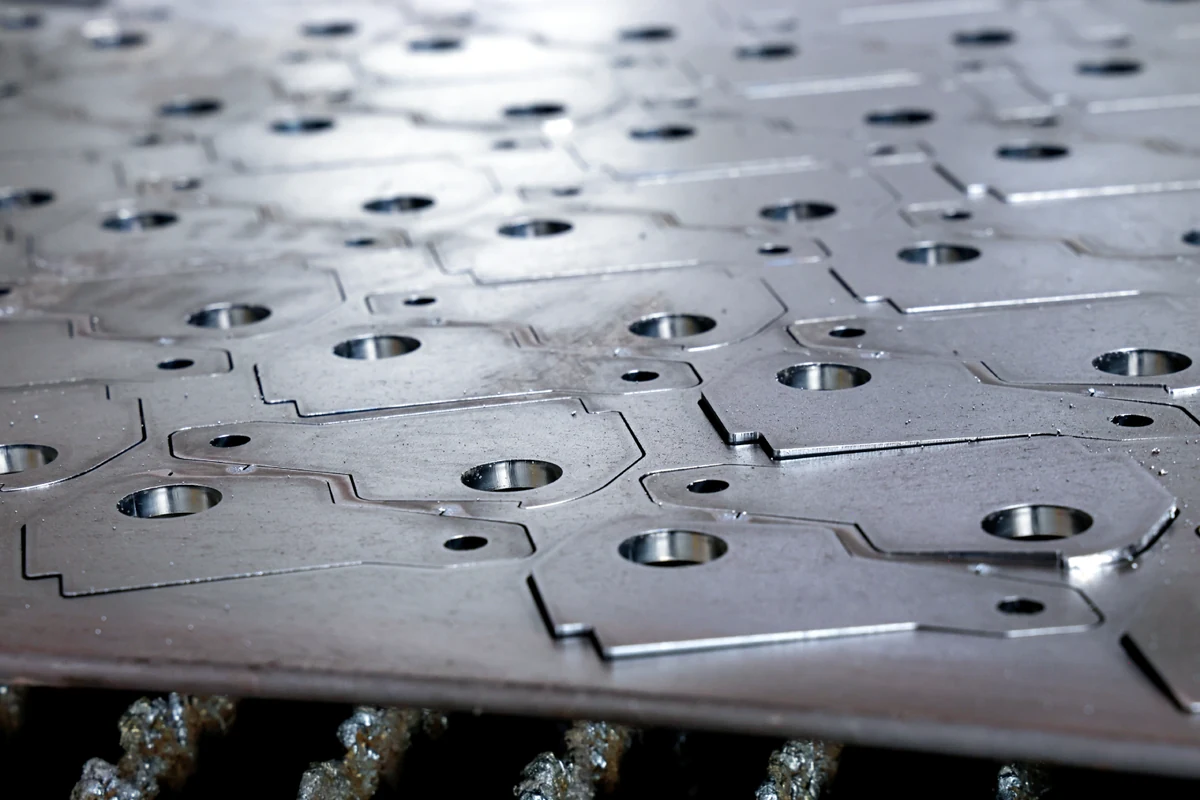
Feature spacing and geometry requirements are stricter with aluminum. That’s because of its high conductivity. Densely nested small features in thin aluminum sheet will cause the heat to accumulate in the narrow webs between cuts. Komacut’s DFM rules set the floor at a hole-to-hole distance of 5× material thickness and a hole-to-edge distance of 2× material thickness. On a 1.5 mm aluminum panel with a tight perforation pattern, treat 5×T as the minimum rather than the target: going beyond it buys you a flatter part and a cleaner edge.
Can You Anodize Laser Cut Aluminum?
Yes, and it’s the reason aluminum often gets specified for visible parts. It’s also the one finish that has no equivalent in steel. Anodizing forms a controlled oxide layer out of the aluminum itself, so it only works on aluminum.
However, anodizing is less effective than powder coating at hiding defects. The coating it forms is translucent, so coarse cut edges, residual dross, or scratches from handling stay visible after finishing. If a laser-cut edge sits on a visible face of an anodized part, take a second to confirm that deburring is on the part before you order.
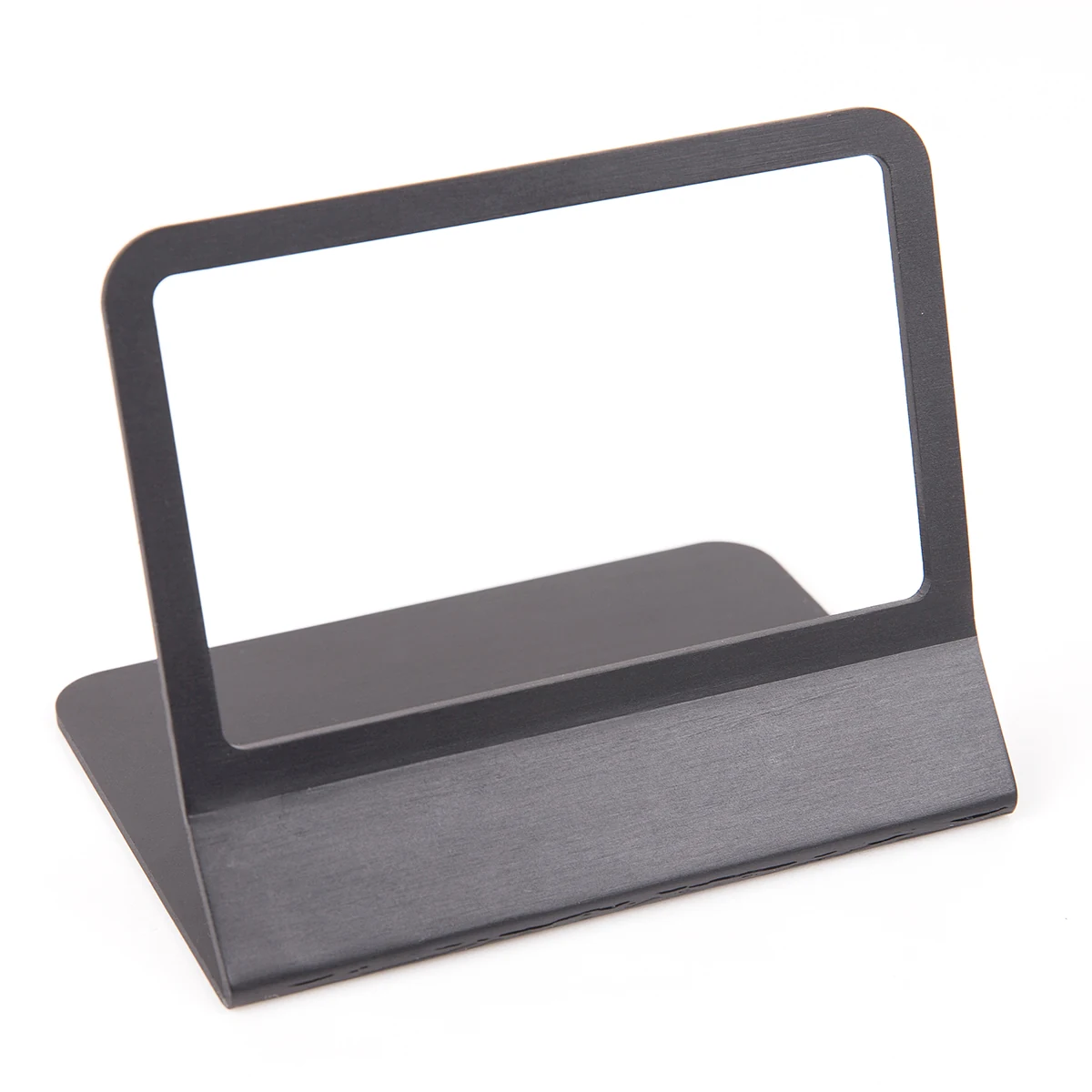
For a visible enclosure face on a cost-sensitive product, powder coating is preferable. Powder coating is opaque, hides more flaws, and handles larger parts (up to 2,400 × 1,800 × 1,200 mm).
Go for anodizing when you need the wear and corrosion resistance or the specific look, but be prepared to pay for edge prep. Full options are on our surface finishing page.
How to Order Custom Laser Cut Aluminum Parts
Upload your 3D file (STP, STEP, or SLDPRT) to the Komacut platform and get a price in 30 seconds. This includes automated DFM feedback, so if there’s a hole too close to a bend or a flat pattern outside the sheet size envelope, it will be flagged immediately. There’s no minimum order quantity, so the same file covers a single prototype or a 2,000-piece run.
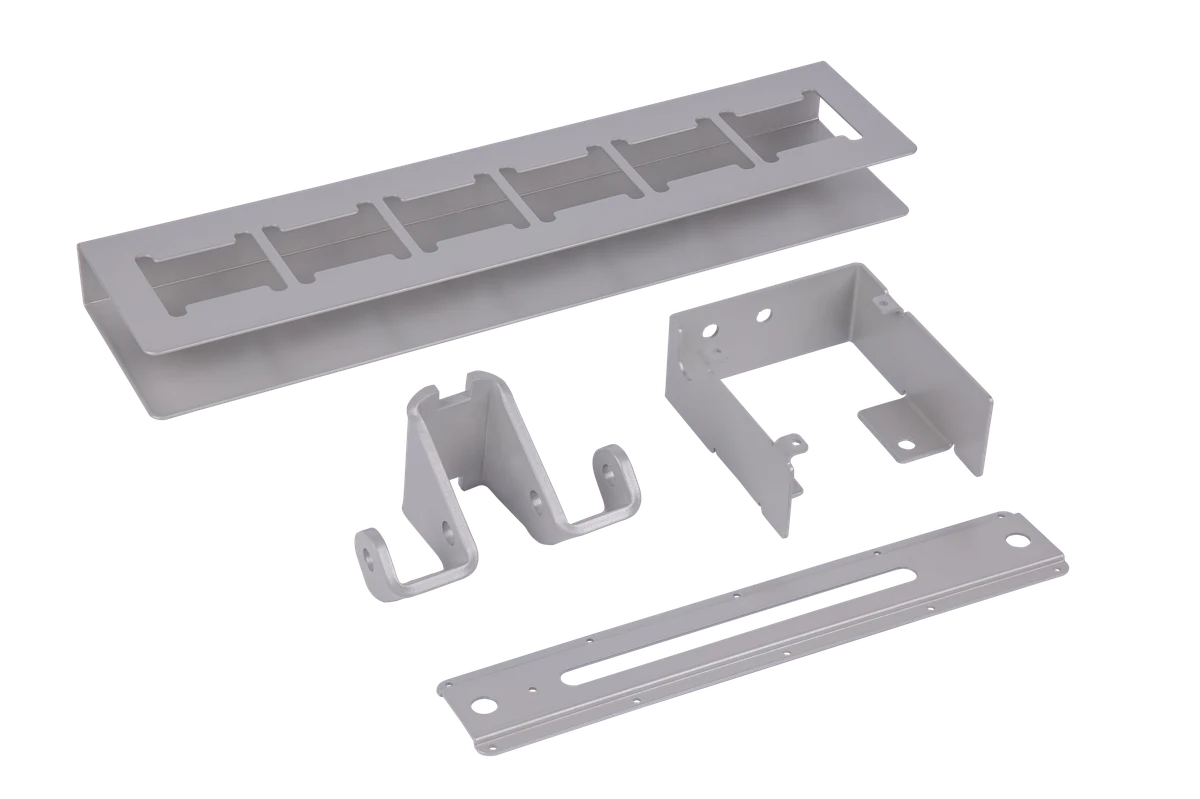
We ship the finished part, not a cut blank. Cutting, bending, threading, chamfering, and surface finish will all be part of the same order. That means a 5052-H32 enclosure panel arrives cut, formed, threaded, and anodized instead of leaving you with a flat piece that needs to be routed to two more vendors.
Instant DFM Checking
Try Komacut's instant quotation tool
Upload your laser cut aluminum part and get a price in 30 seconds, with automated DFM feedback on thickness, sheet size, and feature spacing before you order.
Frequently Asked Questions
Can laser cut aluminum be bent?
Yes, up to 10.0 mm thick, with bend radii from 1.0 mm to 16.0 mm and a minimum radius of one material thickness. A fiber laser cuts aluminum to 20 mm, but the press brake stops at 10 mm, so thicker parts stay flat or become assemblies. 6061 starts to crack around 120°, which is why 5052-H32 suits tighter bends.
Is laser or waterjet better for cutting aluminum?
Laser cutting is better for sheets under 6 mm. A fiber laser will run about 10–18 m/min compared to 0.6–0.8 m/min for waterjet. Waterjet is a better choice for cutting thick plates, heat-sensitive tempers, or parts where a heat-affected zone would affect fatigue performance.
Can you laser cut 7075-T6 aluminum?
Yes, but it’s rated as Limited. 7075 aluminum has high zinc and copper content, which makes it prone to hot cracking and stress-corrosion cracking. The laser heat also degrades the T6 temper locally. For fatigue-critical parts, choose 6061-T6 instead and machine the cut edge afterward. Or avoid the laser and use abrasive waterjet to cut the part.
Why is nitrogen used instead of oxygen to cut aluminum?
Nitrogen is an inert gas, so it clears molten material from the kerf without oxidizing the cut face. This results in a bright, oxide-free edge that can be anodized, coated, or painted without first being descaled. Oxygen assist, which is standard for mild steel, would leave an oxide layer that would have to be removed before finishing.
Does laser cutting warp aluminum?
Thin aluminum can distort under concentrated heat because of its high conductivity. Because of this, an aluminum part with densely nested small features and closely spaced slots will be prone to warping. Opening up feature spacing can keep thin panels flat without needing to change the material or the process.
Is there a minimum order quantity for custom laser cut aluminum?
No. Komacut has no minimum order quantity and allows orders ranging from single prototype pieces to production volumes. However, the price per piece drops steeply with higher quantities. Going from 25 pieces to 2,500 can result in a cost saving of 40–65% per unit.
Upload your aluminum part to see pricing across 6061-T6, 5052-H32, and the rest of the material list in about 30 seconds, with DFM feedback before you order. Get an instant quote.