
- Key Takeaways
- How Waterjet Cutting Works
- How Laser Cutting Works
- Waterjet vs Laser Cutting
- When Should You Use Laser Cutting?
- When Should You Use Waterjet Cutting?
- Which Cutting Method Costs More?
- Which Cutting Method Should You Pick?
- FAQ
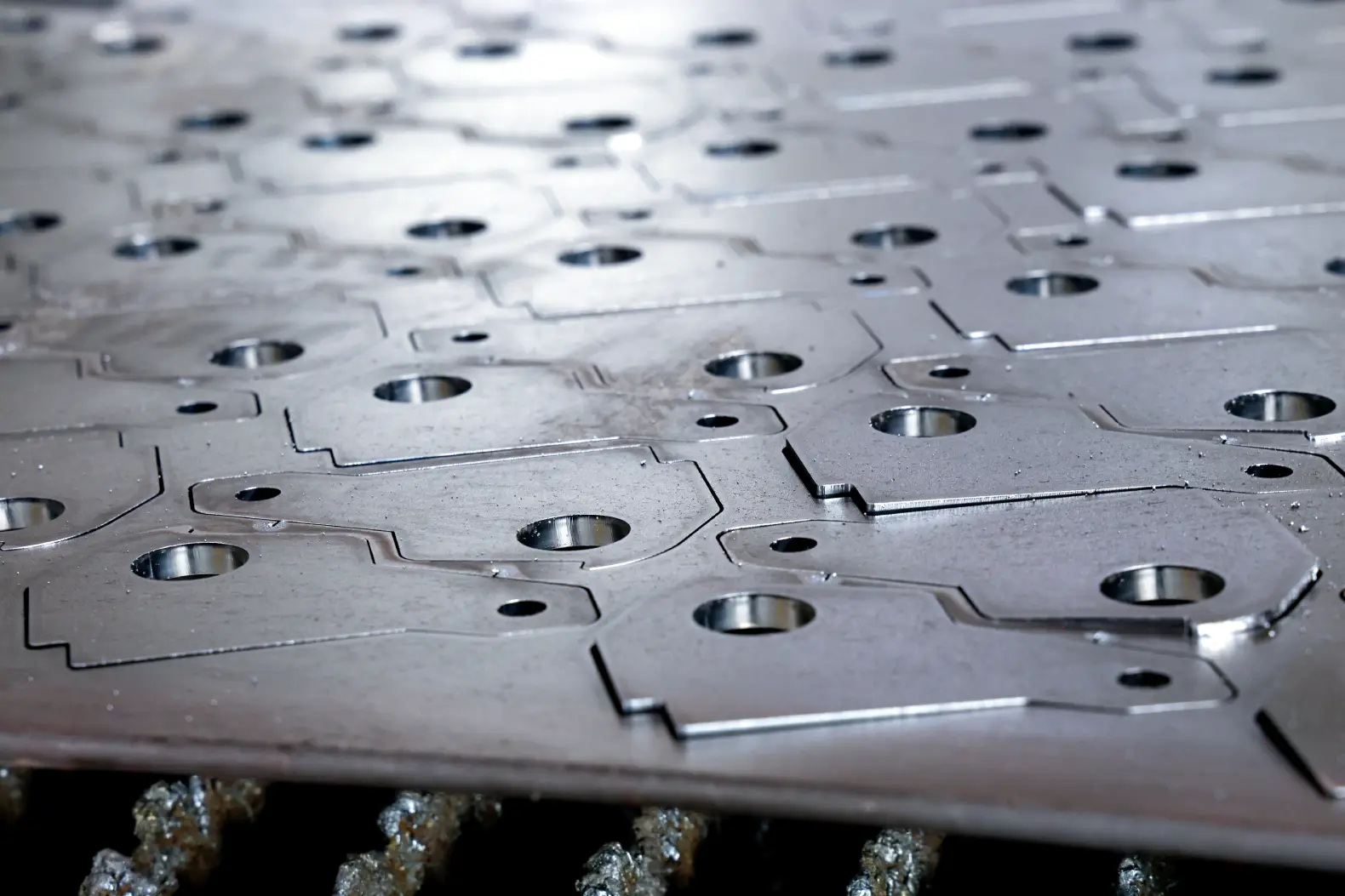
For sheet metal up to about 12 mm thick, laser cutting beats waterjet cutting on speed, per-part cost, and precision.
This covers the vast majority of fabricated parts, including brackets, enclosures, chassis, and panels.
However, there are three situations where waterjet cutting is superior:
- A plate thicker than your laser can cleanly handle
- Materials that can't tolerate heat
- Non-metal materials a laser can't cut cleanly
So for a typical sheet metal part, the right choice is almost always laser. The rest of this guide explains in depth why that's the case, and the exceptions where waterjet cutting is the right call.
Key Takeaways
Waterjet cutting works by blasting a part with a concentrated jet of water mixed with an abrasive at extremely high pressure.
The abrasive cuts through the material using a rapid erosion process, meaning it cuts without heat.
Laser cutting uses a laser beam that cuts through material using high heat.
For thinner materials, laser cutting is typically faster and cheaper than waterjet cutting.
Waterjet cutting is often more suitable for thicker materials, parts that should be cut without heat, and non-metallic materials that a laser can't cut through cleanly.
Table of Contents
How Waterjet Cutting Works
Abrasive waterjet cutting is accomplished by mixing garnet abrasive into water and forcing the fluid through a small orifice at high pressure (roughly 60,000 psi on standard systems, and up to 90,000 psi on ultra-high-pressure pumps).
When you see a waterjet in action, it looks like the water itself is slicing through the material. In reality, it's the garnet that's responsible for the cutting, not the water. The water propels the abrasive and targets it to the right spot, but it wouldn't be able to cut on its own.
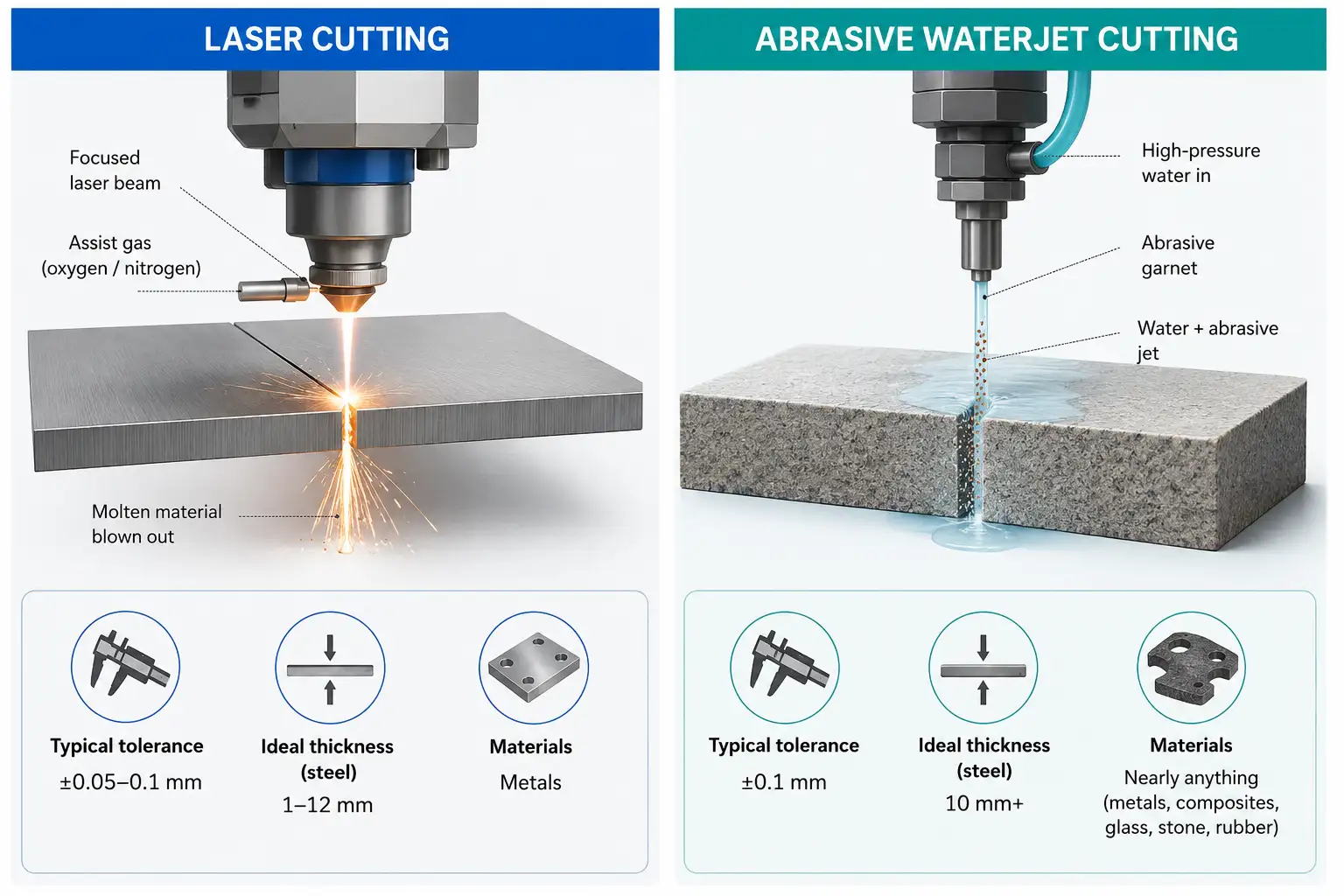
There's also no heat involved in waterjet cutting. The workpiece stays close to room temperature through the entire cut.
How Laser Cutting Works
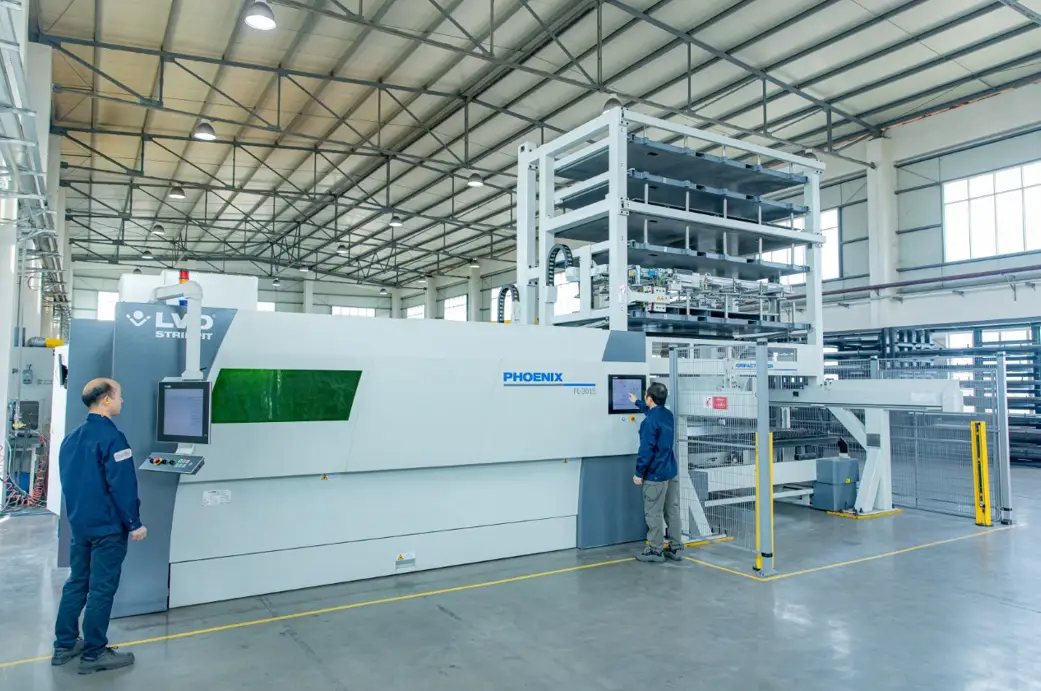
Laser cutting works by aiming a focused beam (typically a fiber laser) onto the material to melt or vaporize a narrow line into it. While the beam cuts, an assist gas (oxygen or nitrogen) blows the molten metal out of the kerf to ensure a clean result.
Waterjet vs Laser Cutting
| Spec | Fiber laser cutting | Abrasive waterjet cutting |
|---|---|---|
| Cutting Mechanism | Thermal cutting | Mechanical erosion (water + garnet) |
| Typical tolerance | ±0.05–0.1 mm on sheet gauges | ±0.1 mm (but harder to hold on thick parts) |
| Kerf width | ~0.15–0.4 mm | ~0.5–1.0 mm |
| Ideal thickness (steel) | 1–12 mm | 10 mm+ |
| Practical max (steel) | ~20–25 mm with 6 kW+ | 100 mm+ |
| Speed (3 mm mild steel) | 4–5.5 m/min at 6 kW | A fraction of laser speed |
| Heat-affected zone | Narrow HAZ along the cut edge | No HAZ |
| Materials | Metals (struggles with some reflective or thermosensitive materials) | Nearly anything (metals, composites, glass, stone, rubber) |
| Main consumable cost | Assist gas, electricity | Garnet abrasive |
Be aware that the actual tolerances will depend on the material, its thickness, and the condition of the machine. Consult Komacut's sheet metal process tolerances for the values we actually hold in production.
When Should You Use Laser Cutting?
Use laser cutting on any production sheet metal part with a thickness between 1 to 12 mm.
With a 6 kW fiber laser, you can cut 3 mm mild steel at 4 to 5.5 meters per minute. But an abrasive waterjet would take much longer to wear through the same material. And because a longer cycle time adds cost, the speediness of laser cutting can help ease the total price per piece.
Laser cutting is also more precise. The beam's kerf can be as narrow as 0.15 mm (against 0.5 mm or more for a waterjet stream). That means it's capable of producing sharper inside corners, finer slots, and cleaner holes. A waterjet, on the other hand, can only handle bigger features because the stream itself is wider and it tapers as it exits thick material.
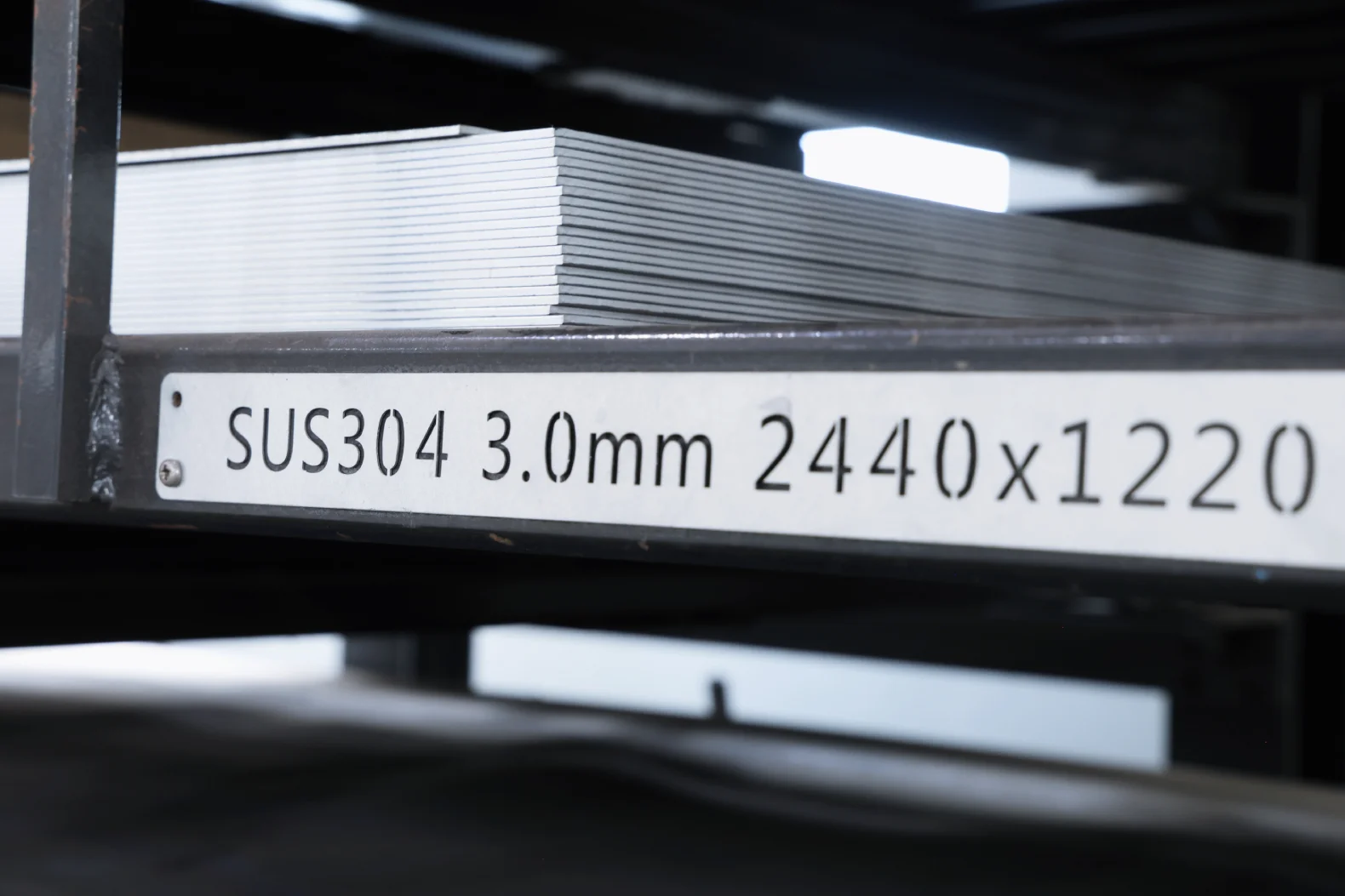
These advantages are why on-demand platforms build their sheet metal capacity around fiber lasers. Komacut's laser cutting service runs aluminum (AL5052), stainless (SUS304), cold-rolled, galvanized, and spring steel across the full sheet gauge range. Because the process is fast and repeatable, quoting is automated. Simply upload a STEP file and get pricing in about 30 seconds.
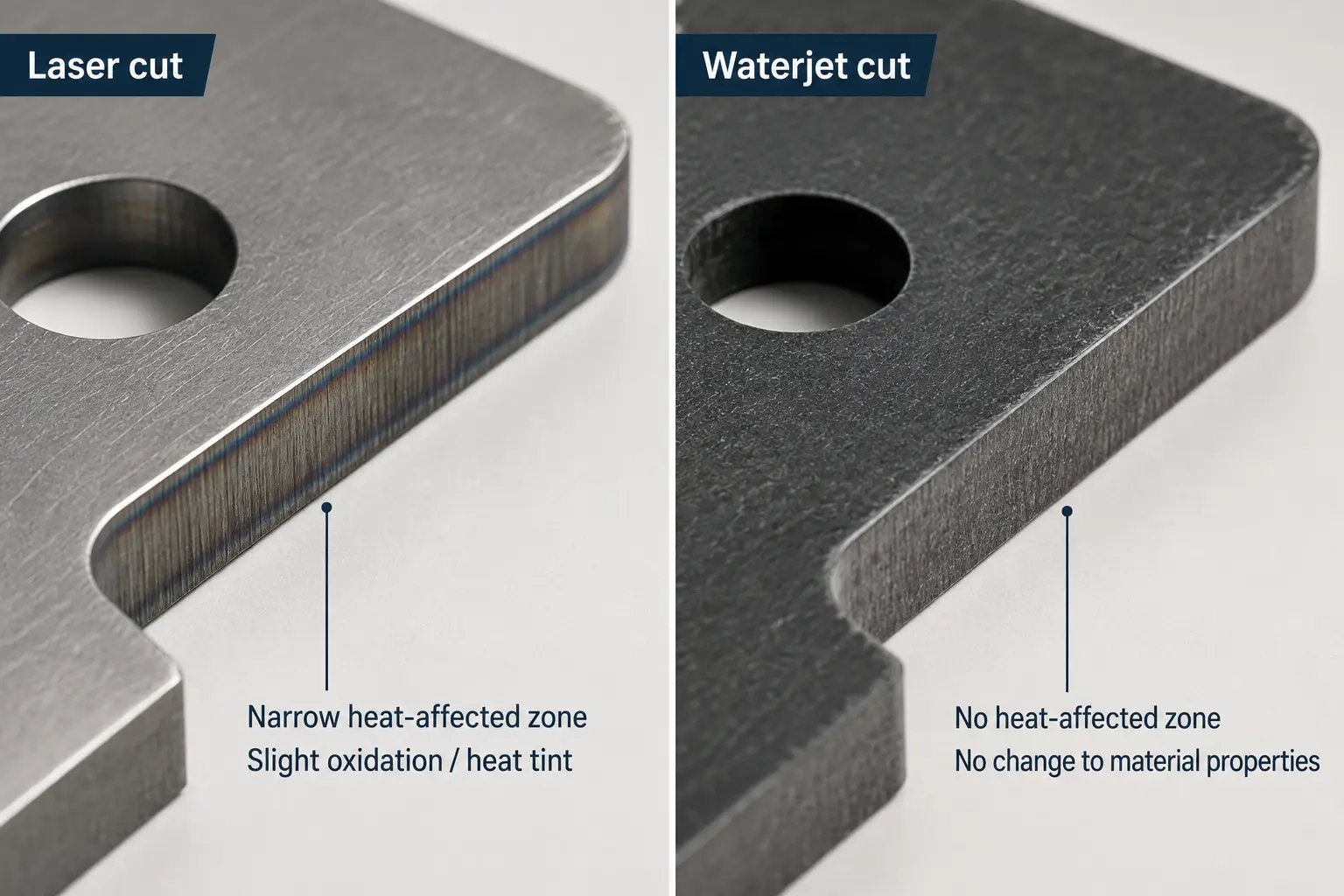
The downside is the heat used in the cutting process. A laser-cut edge has a narrow heat-affected zone where the material becomes slightly harder and sometimes oxidized. For most brackets and enclosures, this won't make a practical difference. But it can become an issue if the part will be welded along that edge, fatigue-loaded, or made from a heat-treated alloy.
When Should You Use Waterjet Cutting?
Waterjet cutting is preferable when you need to avoid using heat, the material is thick, or you want to cut through something other than metal.
Because waterjet is a cold cutting process, there's no heat-affected zone, no warping, and no change to the material's properties. If you cut a pre-hardened tool steel or an aged aluminum alloy on a waterjet, the edges will have the same temper as the middle of the plate.
If you're dealing with thick materials, a fiber laser's edge quality will start to degrade past ~20 mm in steel, even with high power. But a waterjet cuts 100 mm plate just as well as it cuts through 5 mm plate. It just takes longer. OMAX, one of the major waterjet builders, quotes ±0.1 mm as typical tolerance, with the caveat that thick parts are harder because the jet lags and tapers as it penetrates the material.
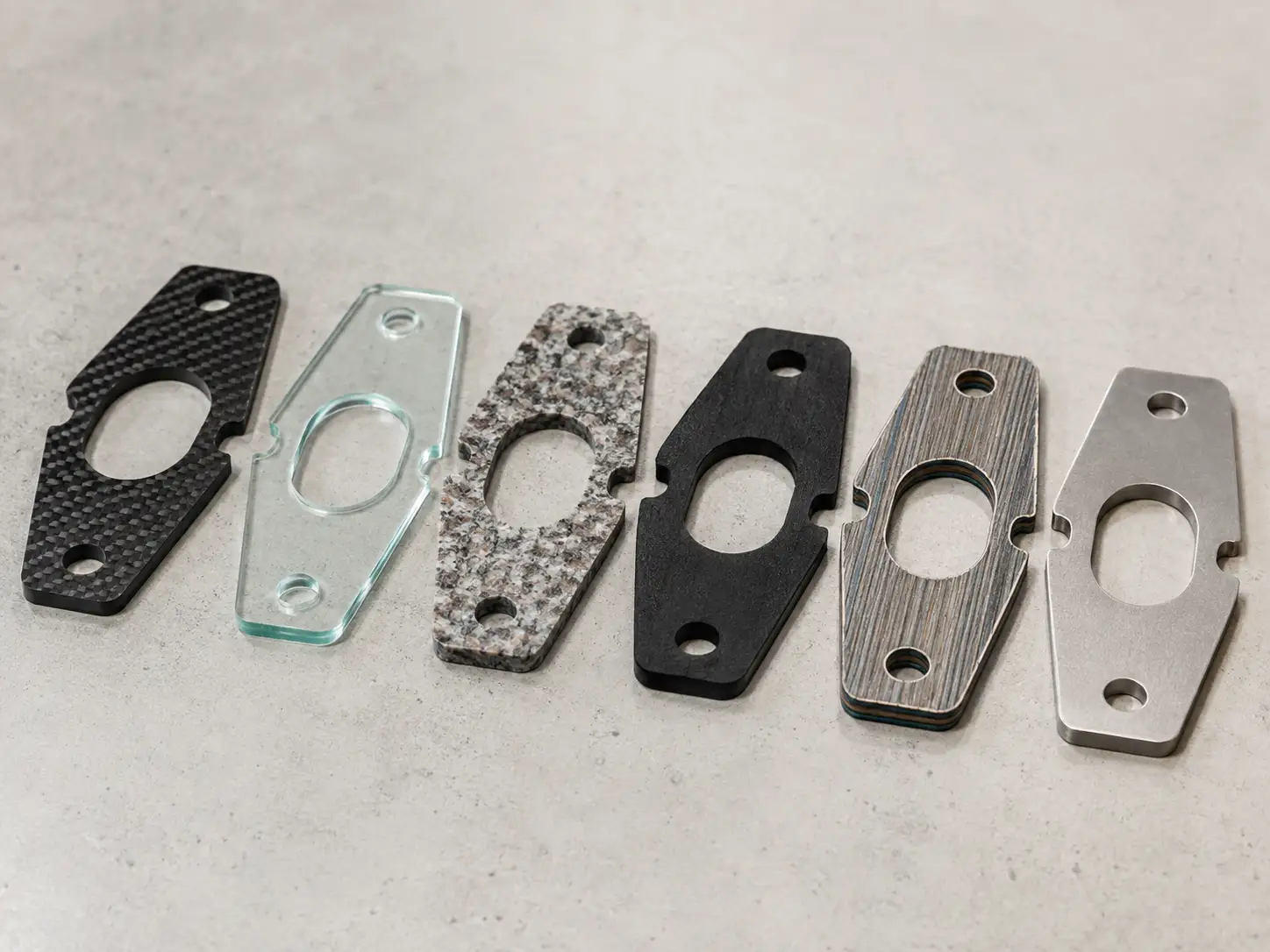
Waterjet cutting is also suitable for a number of materials other than metal. Carbon fiber layups, glass, granite, rubber gaskets, and laminated stacks can all be cut using abrasive waterjets. A laser either can't cut through these or shouldn't (in the case of thermosensitive and some highly reflective materials).
Which Cutting Method Costs More?
It really depends on the thickness of the material you're cutting.
Going by hourly machine rates is misleading. On that measure, waterjet always loses. In large part, that's because of the garnet abrasive. The machine consumes it continuously for the duration of the cut. On long or thick cuts, the abrasive itself can be the biggest line item. And with cycles that run several times longer than laser does on thin materials, this just adds to the cost.
But if you compare the cost per part, then the answer depends on what you're cutting.
For thinner materials, laser cutting is cheapest. It's fast and there's no abrasive material to worry about.
This flips once when you're cutting thicker material. If your laser needs multiple slow passes or produces an edge that needs rework, then waterjet's steady, one-pass erosion becomes the cheaper option (even with the cost of abrasive).
For most manufacturers, waterjet becomes cheaper somewhere between 15 and 25 mm in steel. But the exact number depends on laser power and how fussy you need to be about the quality of the edges.
So if your part is thin-gauge and you're still being quoted waterjet cutting, ask why. Sometimes there's a good answer (like a heat-sensitive alloy or downstream welding on the cut edge). But often, it's just the machine that manufacturer happens to own, which may not be the best choice for your product.
Which Cutting Method Should You Pick?
Go with laser cutting if your part is made of metal, under ~12 mm thick, and has a large production volume.
Go with waterjet cutting if your part is thicker than ~20 mm, made from a heat-treated or heat-sensitive material, will be welded or fatigue-loaded along the cut edge, or isn't made of metal.
When either method could work, laser is usually the right choice due to its speed.
Ultimately, it's your material choice that will settle the matter. A part designed in 2 mm AL5052 should definitely be cut with laser. But the same design in 25 mm plate is a better candidate for waterjet cutting.
Komacut's materials library and design guides cover gauge and alloy selection in detail, including how your choice of cutting method affects downstream bending and edge finishing.
Instant DFM Checking
Try Komacut's instant quotation tool
Upload a STEP file and get laser or waterjet cutting pricing with automated DFM feedback, so you can compare processes and plan your part with confidence.
Frequently Asked Questions
Is waterjet cutting cheaper than laser cutting?
No. For sheet metal under ~12 mm, laser cutting is cheaper per part because it cuts several times faster and doesn't consume abrasive in the process. But waterjet becomes the more affordable option if you're cutting thick plate (~20 mm+). At that thickness, laser cutting time slows down and the edge quality drops.
Which is more precise, waterjet or laser cutting?
Laser cutting is more precise. Fiber lasers hold ±0.05–0.1 mm on sheet gauges with a kerf as narrow as 0.15 mm. Because of that, they're able to cut finer features and sharper corners. Waterjet typically holds ±0.1 mm on thin parts, but the wider stream (0.5–1.0 mm kerf) and taper on thick material limit its ability to handle fine detail.
How thick can waterjet and laser cutting go?
Abrasive waterjet cuts steel over 100 mm thick, though the cycle time is long. Fiber lasers reach roughly 25 mm in mild steel at 6 kW, more with higher power. Edge quality and speed drop well before that limit, so past ~20 mm waterjet usually produces the better edge.
What materials can't be laser cut?
Lasers shouldn't cut materials that burn, melt destructively, or release toxic fumes under heat: carbon fiber composites, glass, stone, and PVC. Reflective metals used to be a problem, but modern fiber lasers handle aluminum and brass reliably. Waterjet cuts all of them, which is why manufacturers that default to laser still keep one.
Does laser cutting weaken the metal?
Laser cutting creates a narrow heat-affected zone along the cut edge, changing hardness and microstructure slightly. For most parts this makes no practical difference. It matters for fatigue-critical edges, pre-hardened alloys, and weld joints on the cut line, where waterjet's cold cut preserves the base material's properties.
Most sheet metal parts are laser parts. Upload your STEP or SLDPRT file to Komacut and get laser-cut pricing with automated DFM feedback in about 30 seconds, whether it's a single piece or production volume.