
- Key Takeaways
- What Is Passivation of Stainless Steel?
- Why Does Stainless Steel Rust After Fabrication?
- Nitric vs. Citric Acid Passivation
- Which Standard Should You Call Out for Passivation
- When Do Parts Need Passivation
- Passivation vs. Pickling vs. Electropolishing
- How Is Passivation Verified?
- FAQ
Passivation of stainless steel is a chemical treatment (usually a nitric or citric acid bath) that removes free iron from a part’s surface. This allows the protective chromium oxide layer to re-form cleanly.
Passivation does not add any coating or thickness. The point is to strip out the iron contaminants that cutting, bending, and machining can leave behind, because those contaminants can rust (even in 316 grade stainless steel).
Whether your parts need passivation comes down to the environment and industry it will be used in. Bare stainless steel used in wet, salty, or hygiene-critical service should be passivated. But for a dry indoor bracket or a part headed for powder coating, you can usually skip it.
In this article, we’ll go over how passivation works, which standards apply, and whether you should specify it in your next design.
Key Takeaways
Passivation is a chemical treatment that removes iron particles from stainless steel, which helps its protective layer re-form completely.
Passivation can help prevent rust spots and other types of corrosion.
Because it does not add any coating, the dimensions, hole sizes, and fits of parts are not affected by passivation.
Passivation is typically mandatory for parts used in medical, pharmaceutical, or food applications.
Table of Contents
- What Is Passivation of Stainless Steel?
- Why Does Stainless Steel Rust After Fabrication?
- Nitric vs. Citric Acid Passivation
- Which Standard Should You Call Out for Passivation: ASTM A967 or AMS 2700?
- When Do Parts Need Passivation (And When Can You Skip It)?
- Passivation vs. Pickling vs. Electropolishing
- How Is Passivation Verified?
- Frequently Asked Questions
What Is Passivation of Stainless Steel?
Stainless steel has a built-in protective mechanism. When an alloy with enough chromium reacts with oxygen, it forms a chromium oxide film over its surface. This film is invisible, chemically inert, and will repair itself as long as it comes into contact with oxygen.
Metallurgists call this the passive layer, and it’s the entire reason 304 grade stainless steel doesn’t rust like mild steel.
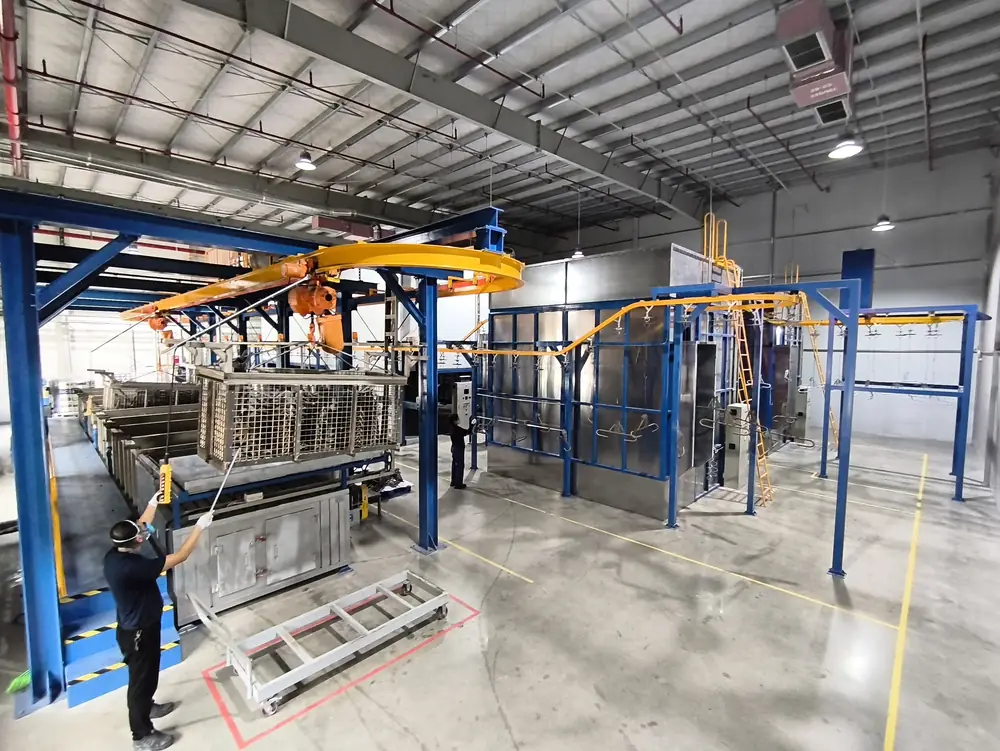
The problem is, fabrication can damage or contaminate this passive layer. Passivation fixes this. The part goes into an acid bath, the acid dissolves free iron and other surface contaminants, and the passive layer re-forms on the cleaned surface with a higher chromium-to-iron ratio than it had before treatment. No additional material is deposited on the part, so its dimensions, hole sizes, and thread fits are exactly the same as before.
To be clear: passivation is not plating or coating (again, nothing is added to the part’s surface).
It’s not a descaling process, either. It won’t touch weld scale, heat tint, or heavy oxides. In fact, welded surfaces have to be clean before passivation can do anything useful. This is why the applicable standards treat cleaning as a separate, prior step.
Why Does Stainless Steel Rust After Fabrication?
When rust forms on a new stainless part, it’s almost never the alloy failing. In many cases, it’s because of iron particles embedded in the material.
Every step in the fabrication process introduces a risk of contamination. In a mixed-material shop, carbon steel grinding dust can settle on stainless sheet stock. Shear blades, machine inserts, and press brakes can transfer iron particles to a stainless steel part if it was also used to bend carbon steel. Laser cutting adds its own issue by leaving an oxidized cut edge where the passive layer has been burned away.
Those iron particles then sit in the passive layer and can rust when they come into contact with humidity. This can result in orange spots on a part the customer bought specifically because it wasn’t supposed to rust.
When this happens, the base metal underneath is usually fine. But in some cases, pitting that starts at a contamination site can compromise the surrounding passive layer over time and result in more serious corrosion.
And when it’s not iron, it’s heat.
Welding produces heat tint: colored oxide bands that pull chromium out of the metal just beneath them. This leaves a chromium-depleted zone that corrodes more easily.
For heat tint, passivation alone isn’t enough. The part will need to be cleaned first before the passivation can have the desired effect (more on the difference below).
Nitric vs. Citric Acid Passivation
Both acids will dissolve free iron without attacking the stainless steel itself. ASTM A967 recognizes both as suitable for passivation. The main differences are operational.
Citric acid passivation is the better option for most commercial parts. It’s safer to run, won’t etch the base metal, and satisfies ASTM A967 requirements.
Nitric acid passivation should be used when a customer flow-down or aerospace spec requires a particular nitric type.
Note that high-strength stainless steel grades (like 440C) are at risk of hydrogen embrittlement and cracking when exposed to acids. For these materials, consult with your finishing supplier before picking a passivation method.
Which Standard Should You Call Out for Passivation: ASTM A967 or AMS 2700?
These three documents cover almost every passivation callout you’ll encounter:
ASTM A967: This is the general-industry standard for chemical passivation of stainless steel parts. It defines the nitric and citric treatments plus the verification tests. For commercial and industrial hardware, use this standard.
AMS 2700: This is the standard for aerospace applications. Nitric acid is Method 1 (split into eight types), while citric acid is Method 2. In substance, this standard is nearly identical to ASTM A967. The main difference is the industry. (Note that this standard supersedes QQ-P-35.)
ASTM A380: This standard is broader than ASTM A967 but often confused with it. It covers cleaning, descaling, and passivation of stainless systems and equipment, including pickling. Call it out when weld scale or heat tint has to be removed before passivation can happen.
On your drawing, the simplest callout is “PASSIVATE PER ASTM A967” (unless the part is destined for aerospace use, of course). That leaves the finisher free to pick the appropriate treatment and test for your grade.
Specify an exact treatment (e.g., “ASTM A967 Citric 3”) only when your industry or customer demands it. Over-specifying a treatment your supplier doesn’t run can add cost and lead time without adding corrosion resistance.
When Do Parts Need Passivation (And When Can You Skip It)?
Default to passivation when any of these conditions apply:
- Wet Environments, Coastal Areas, or Chloride Exposure: Chlorides can compromise stainless steel’s passive layer, increasing the risk of corrosion. Embedded iron creates vulnerable points that make it easier for chlorides to affect the part.
- Hygiene-Critical Industries: Parts intended for medical devices, pharmaceutical equipment, or food and dairy processing should all be passivated (this is usually mandated by the customer’s quality system).
- Bare Stainless Steel: If the stainless surface won’t be painted or plated, passivation is a cheap way to prevent rust spots.
- Welded Assemblies Headed into Corrosive Service: Clean the welds first, then passivate the assembly.
You can usually skip passivation in these situations:
- Indoor Environments, Dry Areas, or Unseen Locations: An internal bracket in a climate-controlled cabinet doesn’t need to be passivated. The passive layer on 304 stainless steel can handle those conditions on its own.
- Coated Parts: Powder coating or e-coating over the part makes passivation redundant. The coating already protects against corrosion and coating lines run their own pretreatment process.
- Fit-Check Prototypes: If the part is meant only to validate geometry, passivation is a waste. Save it for the production order.
The general rule: passivate bare 304 or 316 production parts that are meant for use in environments with low corrosion risk.
It’s a small line item, it changes nothing dimensionally, and rust spots will cost you far more (in customer trust, returns, and replacements) than the treatment will.
On Komacut, passivation is one of the standard surface finishing options for stainless steel parts: select it as the finish when you configure the part and it’s built into the quote.
Passivation vs. Pickling vs. Electropolishing
These three processes are complementary, but they’re not interchangeable.
The ASSDA defines pickling as “the removal of any high temperature scale and any adjacent low chromium layer of metal from the surface of stainless steel by chemical means.”
Passivation can’t do that, which is why a heat-tinted weld must be pickled before passivation accomplishes anything on it.
How Is Passivation Verified?
ASTM A967 specifies pass/fail tests to be run on each lot.
The main ones are:
- Water immersion (submersion cycles to reveal residual contamination)
- High humidity exposure
- Salt spray
- Copper sulfate test (free iron on the surface triggers a visible color change)
- Potassium ferricyanide-nitric acid test (for trace iron detection)
For safety- or hygiene-critical parts, specify the test on the purchase order. “Passivate per ASTM A967, verify by water immersion” tells the supplier exactly what passing looks like. Without a named test, the finisher will default to whatever verification process they normally run.
Instant DFM Checking
Try Komacut's instant quotation tool
Upload your stainless part, select passivation as the finish, and get pricing with DFM feedback in about 30 seconds, whether you need one bracket or a thousand.
Frequently Asked Questions
Does passivation change part dimensions?
No. Passivation is a chemical cleaning process, not a coating. It restores the passive layer, which is only a few nanometers thick, and far below anything a caliper or CMM can detect. Restoring this layer does not affect tolerances, hole sizes, or thread fits. This makes passivation one of the few finishes that are safe for precision parts with tight fits.
How long does passivation last?
Passivation lasts indefinitely in clean, dry service. That’s because the passive layer will restore itself as long as there is oxygen present. But in coastal, marine, or chloride-heavy environments, you may need to passivate parts every year or so, though the exact timeline will depend on the environment, steel grade, and maintenance.
Do 304 and 316 stainless steel need passivation?
Yes, but only after fabrication and if the part will be used bare (uncoated and uncovered) in a corrosive or hygiene-critical environment. The stainless steel itself resists corrosion, but laser cutting, bending, and machining can embed free iron that can rust regardless of the grade. For dry indoor use, both grades typically perform fine without passivation.
Can you passivate welded stainless steel parts?
Yes, but passivation alone won’t remove weld heat tint or scale. Those need pickling or mechanical cleaning first. Calling out ASTM A380 in your design covers the cleaning step, while A967 covers the chemical passivation itself.
Does passivation change the appearance of stainless steel?
For most parts, no. The restored oxide film is transparent, so a brushed part stays brushed and a mill finish stays mill. Citric acid processes in particular leave surface appearance untouched. If you want a brighter or smoother surface, you will need electropolishing, but that’s a different process.