
Cold Rolled vs Hot Rolled Steel: How to Choose for Sheet Metal Parts
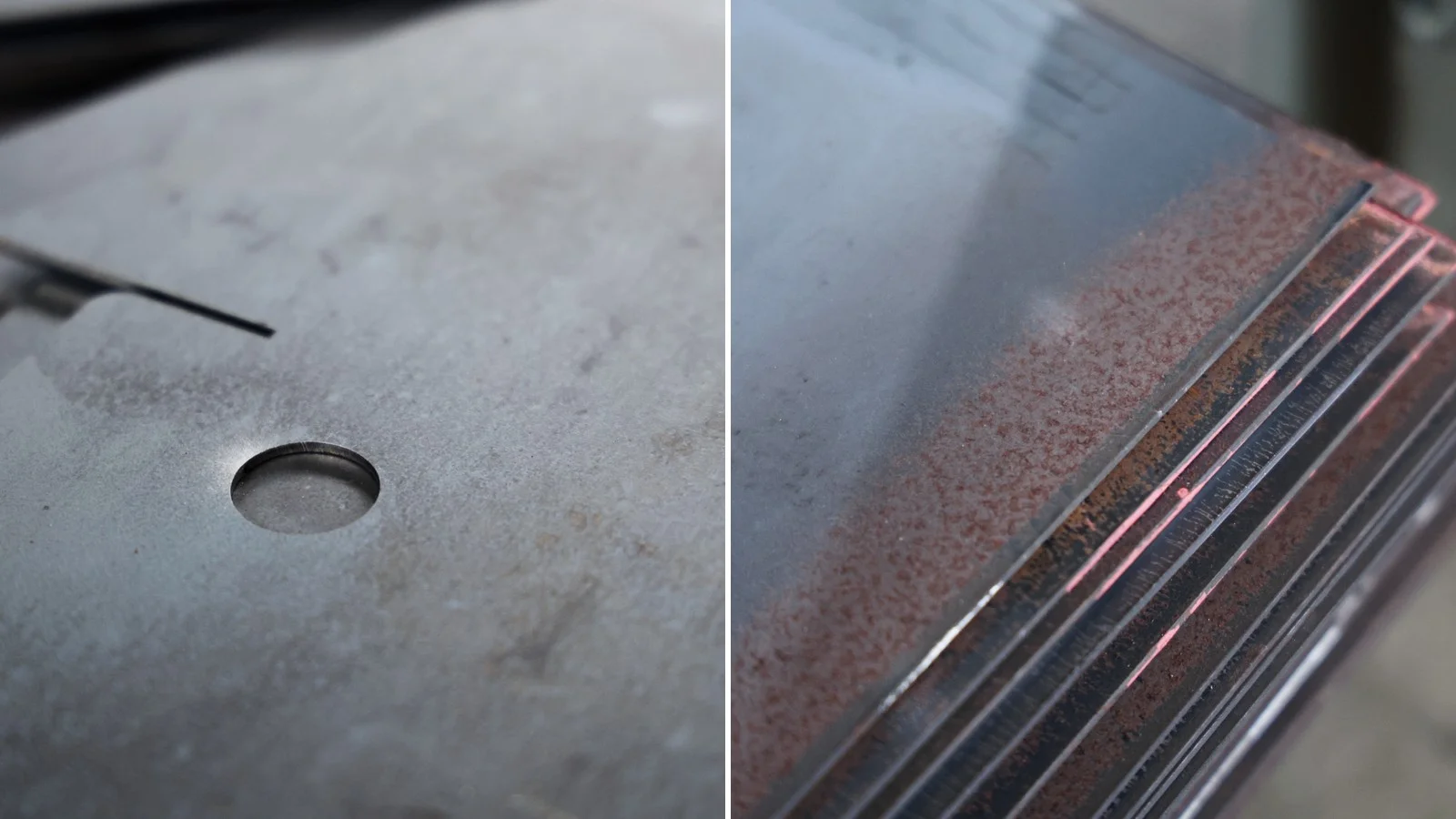
- Key Takeaways
- What Hot Rolling and Cold Rolling Do to Steel
- Cold Rolled vs. Hot Rolled Steel Comparison Chart
- Which One Is Stronger: Cold Rolled or Hot Rolled Steel?
- How to Choose the Right Steel for Your Part
- How Tight Are the Tolerances for Cold Rolled Steel?
- Why and How Mill Scale Gets Removed
- Which Cold Rolled and Hot Rolled Grades Can You Actually Order?
- Cost Difference Between Hot Rolled and Cold Rolled Steel
- Hot Rolled vs. Cold Rolled Decision Checklist
- Frequently Asked Questions
Hot rolled steel is steel that has been rolled above the recrystallization temperature (1,700°F, or 926°C). It leaves the mill soft, scaled, and dimensionally loose, but makes up for this by being cheaper and available in greater thickness than cold rolled steel.
Cold rolled steel is hot rolled steel that has been pickled and rolled again at room temperature. This procedure removes the scale, work-hardens the metal, allows it to run thinner, and gives the material a smooth grey surface.
But how do you decide which one to use for your sheet metal part?
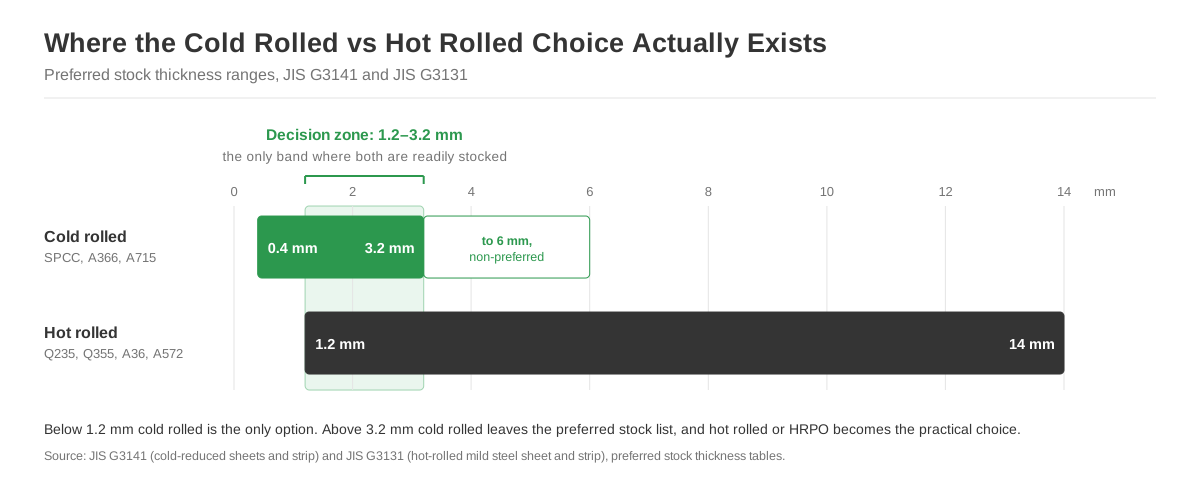
In most cases, you can decide based on thickness. Under JIS G3141, cold rolled sheets go from 0.4 mm to 3.2 mm thick. Technically the standard allows up to 6 mm, but for sheets thicker than 3.2 mm, you're paying extra to order off the preferred list.
Hot rolled steel can run much thicker. Under JIS G3131, it ranges from 1.2 mm to 14 mm.
So if you need a sheet that's less than 1.2 mm thick, the choice is simple: you'll need cold rolled. Likewise, above 3.2 mm cold rolled drops off the preferred stock list, so hot rolled or HRPO is almost always the practical answer.
The tricky part is when it falls somewhere in between those two figures. Which type of steel do you pick if your sheet is between 1.2 and 3.2 mm thick?
That's the question we'll be answering in this article.
Key Takeaways
Hot rolled steel is more affordable than cold rolled, but it comes with mill scale, a rougher and less appealing surface, and looser tolerances.
Cold rolled steel comes at a premium, but the material has already been de-scaled and is more visually appealing.
In many cases, the thickness of your part will decide which type of steel you need: hot rolled can't go below 1.2 mm and cold rolled is usually not a practical option above 3.2 mm.
HRPO steel comes without mill scale and can be an affordable alternative to cold rolled steel.
Table of Contents
- What Hot Rolling and Cold Rolling Do to Steel
- Cold Rolled vs. Hot Rolled Steel Comparison Chart
- Which One Is Stronger: Cold Rolled or Hot Rolled Steel?
- How to Choose the Right Steel for Your Part
- How Tight Are the Tolerances for Cold Rolled Steel?
- Why and How Mill Scale Gets Removed
- Which Cold Rolled and Hot Rolled Grades Can You Actually Order?
- Cost Difference Between Hot Rolled and Cold Rolled Steel
- Hot Rolled vs. Cold Rolled Decision Checklist
- Frequently Asked Questions
What Hot Rolling and Cold Rolling Do to Steel
Hot Rolling
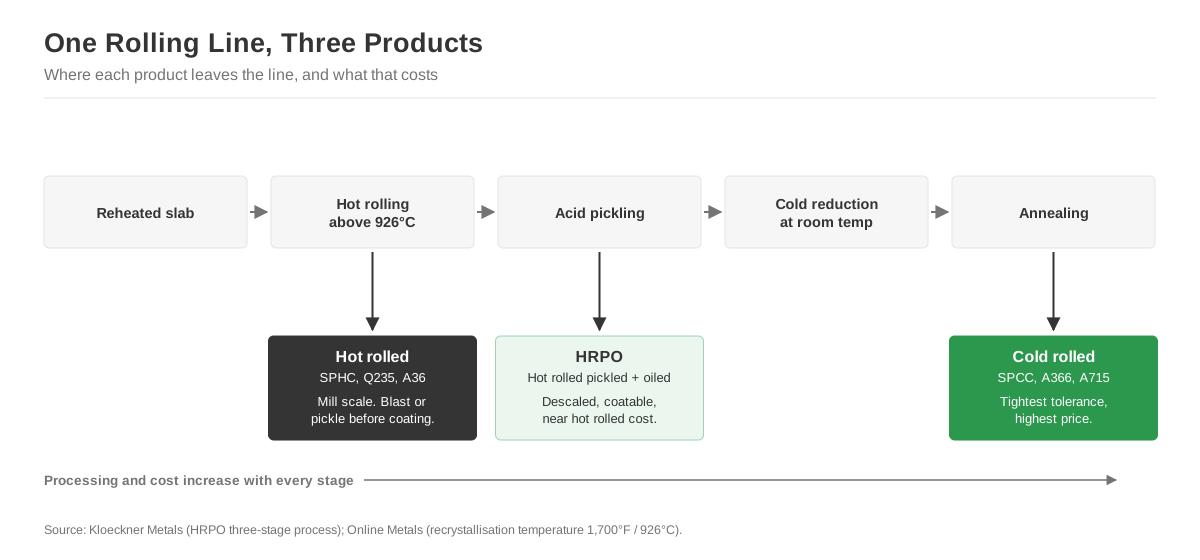
Hot rolling is when steel is passed through rollers to shape it into a sheet at very high heat, above the metal's recrystallization temperature. At that temperature, the steel's grains reform continuously as the slab is squeezed down, so the material never work-hardens.
As it cools, the metal shrinks unevenly. This is why hot rolled steel has loose thickness tolerances, a slight edge camber, and rounded corners on bar and structural shapes. Hot rolled steel, though, is effectively isotropic: the high rolling temperature stops the grain alignment that cold rolling locks in.
It also comes out covered with mill scale. That's because oxygen will attack the steel's hot surface as it emerges from the rollers, leaving behind a flaky, thin layer (usually less than 1 mm) composed of wüstite, hematite, and magnetite. If the steel is going to be painted, the scale has to be cleared off the surface first.
Cold Rolling
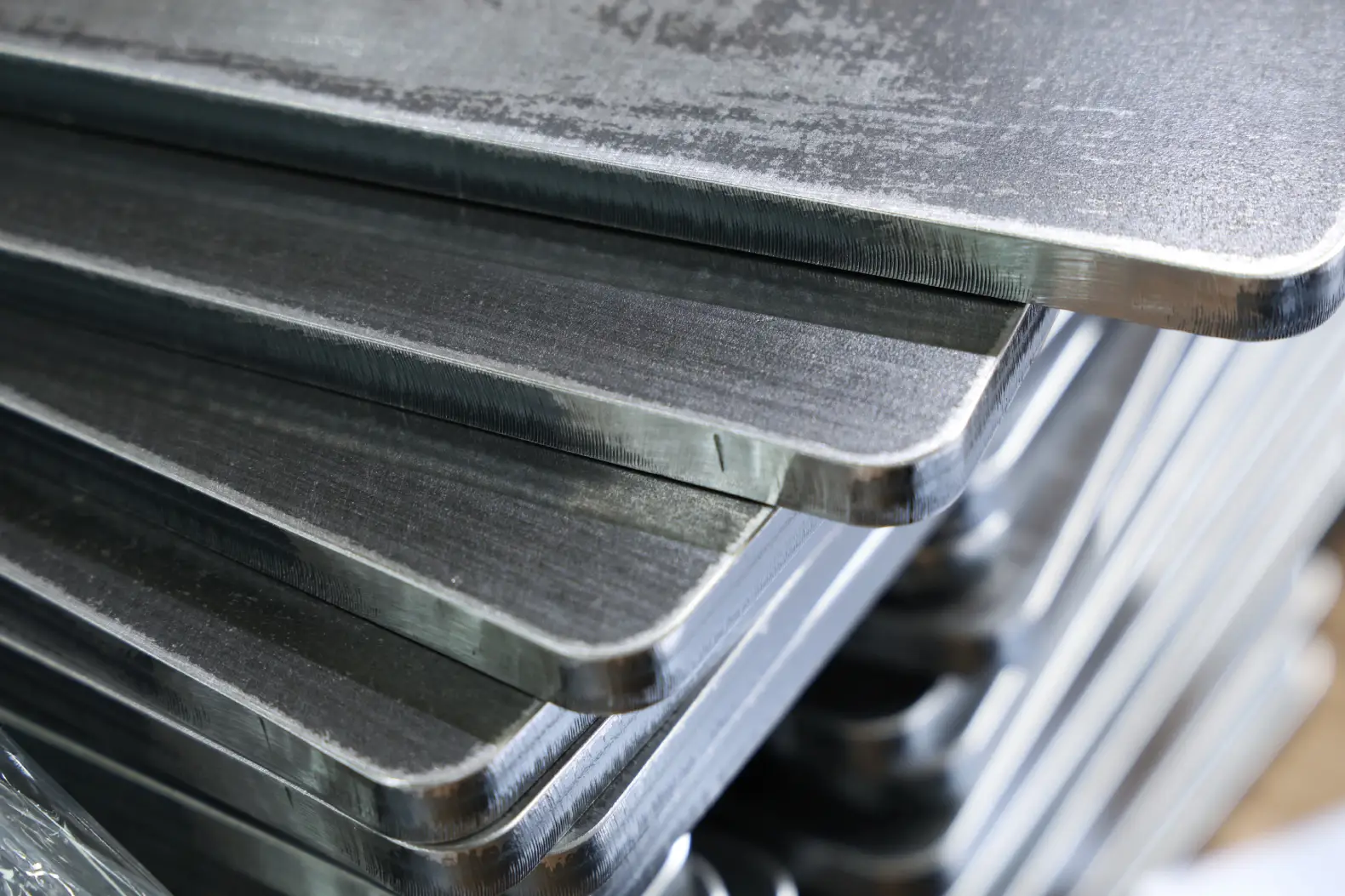
Cold rolling starts with a steel coil that has already been hot rolled. The steel is pickled in acid to clear the scale from its surface. Then it gets flattened through rollers, but this time at room temperature.
Because it's rolled below the recrystallization temperature, the steel's grains deform, which results in a material that's harder, stronger, and less ductile.
Cold rolled sheets are typically annealed afterwards, which makes them easier to form. This is why you can bend SPCC just fine with a press brake, even though the rolling process work-hardened it.
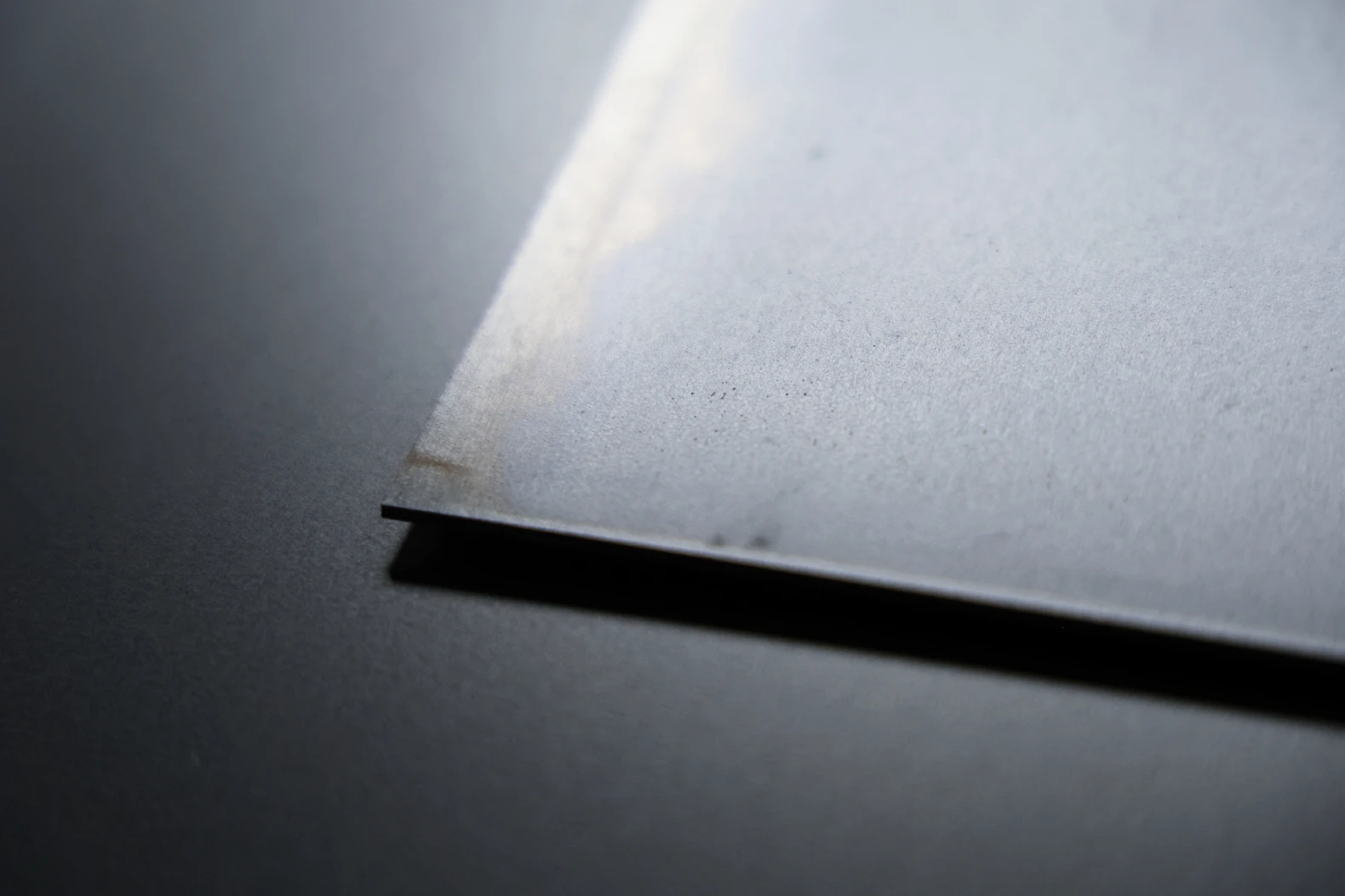
Cold rolled sheet is anisotropic, which means the rolling process elongates its grain structure. Because of this, how the material bends, how it springs back, and its minimum radius all depend on which way the bend line runs relative to the grain.
Cold Rolled vs. Hot Rolled Steel Comparison Chart
| Criteria | Cold rolled | Hot rolled |
|---|---|---|
| Preferred stock thickness | 0.4 to 3.2 mm (JIS G3141) | 1.2 to 14 mm (JIS G3131) |
| Surface | Smooth, matte grey, oiled | Blue-grey mill scale, rough |
| Thickness tolerance | ±0.11 mm at 1.6 mm (JIS G3141 Class A) | ±0.16 mm at 1.6 mm (JIS G3131) |
| Edges (as cut) | Square, clean | Slightly rounded, more burr |
| Formability | Lower (work-hardened, more springback) | Higher (softer, tolerates tight bends) |
| Strength | Set by grade, not by rolling process | Set by grade, not by rolling process |
| Weldability | Good (clean surface, no scale) | Good (scale must be removed at the joint) |
| Coating prep | Degrease, nothing more | Blast or pickle first |
| Relative cost | Higher | Lower |
Note what isn't in that table: a strength column with numbers. That's deliberate.
Which One Is Stronger: Cold Rolled or Hot Rolled Steel?
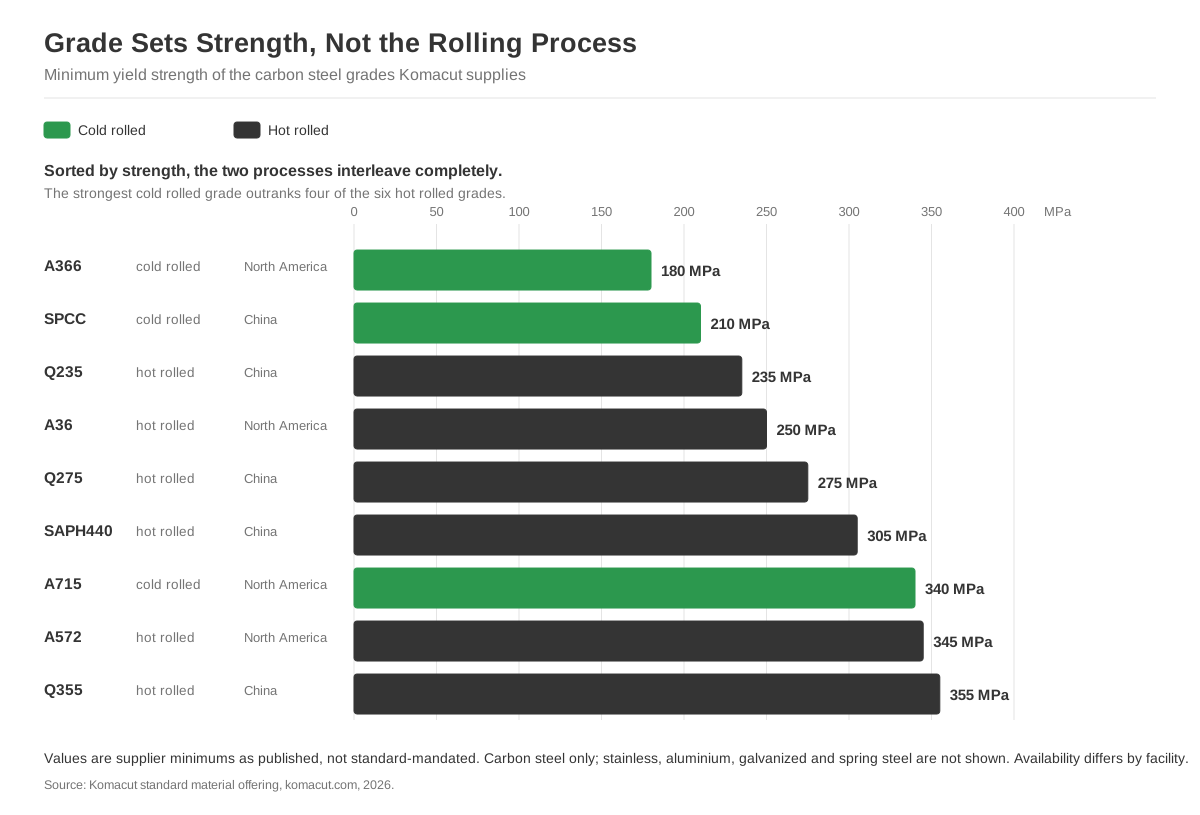
The sheet's strength comes from the grade of the steel, not the rolling process. Many people assume cold rolled steel is always stronger than hot rolled, but this is wrong.
For proof, just look at SPCC, which is the standard commercial grade for cold rolled steel. It comes with a minimum yield of 210 MPa. Meanwhile, Q355 (a hot rolled low-alloy structural steel) has a minimum yield of 355 MPa and tensile of 470–630 MPa. Based on yield, the hot rolled grade is 69% stronger than the cold rolled.
And be aware that JIS G3141 does not even specify a tensile requirement for SPCC. That only applies to SPCCT, a variant of SPCC with mechanical testing. So the 210 MPa minimum for SPCC is set by suppliers, not the standard.
All that being said, cold rolling does increase the strength of the material. But the difference this makes is smaller than the difference between grades. Plus, most commercial sheets are annealed after they're cold rolled, which gives some of that ductility back.
Cold rolling doesn't make steel any stiffer, either. Young's modulus for carbon and low-alloy steel is approximately 200 GPa, and that doesn't change with grade, rolling process, or heat treatment. So if you have a bracket that deflects too much, you won't be able to fix this by switching the material to cold rolled steel. Instead, you'll need a structural solution (e.g., adding a flange, a rib, or making the part thicker).
Here's something else that might surprise you. ASTM A1008 (the US standard for cold-rolled carbon sheet) does not specify any mandatory mechanical properties for commercial steel grades. The only mechanical requirement for CS is a 180° bend test. That's it. So if your design needs a certain minimum yield strength, you're not guaranteed to get it by specifying CS Type B. You'll have to specify a structural grade (SS Grade 33, 40, 50) that actually comes with guaranteed mechanical properties.
How to Choose the Right Steel for Your Part
If the thickness of your part doesn't make the choice for you, there are four questions you can ask to decide whether hot rolled or cold rolled is the right type of steel for your part.
- Is the part going to be visible or get a decorative finish? If so, go with cold rolled steel. It doesn't have any mill scale, so you won't have to worry about the powder coating not holding properly. It also has a smooth surface that can be painted (after being degreased).
- Will the part have any tight bends with inside radii near the material's thickness? Go either with hot rolled, or specify a cold rolled grade that can accommodate it (like SPCD). Because it's work-hardened, cold rolled steel cracks more easily on the outside of tight bends. Komacut accounts for this in our DFM checks, which require an inside bend radius of at least 1× material thickness for mild steel. And if your bend is close to the material thickness, make sure to orient it across the grain, not along it.
- Are you holding a flatness or thickness callout? In this case, specify cold rolled on your drawing. The gauge on a hot rolled sheet varies too much and these deviations can stack up in a multi-part weldment.
- Is it a hidden structural member (e.g., baseplate, weld-on gusset, machine frame bracket)? Then opt for hot rolled steel. The part will be kept out of sight, so cold rolled means paying more to get surface quality no one will actually see.
If none of these apply, default to cold rolled. The added cost is tolerable at low volumes and it can prevent a whole category of downstream problems.
How Tight Are the Tolerances for Cold Rolled Steel?
They're tighter than the tolerances on hot rolled sheet. But the difference is not as high as some suppliers imply. And it's not where the tolerance stack on a finished part actually comes from.
Here's a side-by-side comparison of tolerances for the two standards:
| Nominal thickness | Cold rolled, JIS G3141 Class A (width 600–1000 mm) | Hot rolled, JIS G3131 (width under 1200 mm) |
|---|---|---|
| 1.0 mm | ±0.07 mm | not available (SPHC starts at 1.2 mm) |
| 1.6 mm | ±0.11 mm | ±0.16 mm |
| 2.3 mm | ±0.13 mm | ±0.17 mm |
| 3.2 mm | ±0.17 mm | ±0.21 mm |
At every thickness, cold rolled is only about 1.2 to 1.5 times tighter. And the difference gets narrower with thicker sheets. It's 1.45× tighter at 1.6 mm, 1.31× at 2.3 mm, and 1.24× at 3.2 mm. By the time you get to 3.2 mm, you're paying up to 40% more for cold rolled and only getting an additional 0.04 mm of thickness control.
When you're checking these numbers, note that both standards band their tolerances by sheet width and by thickness. But the width bands don't actually align between them: G3141 breaks at 600 and 1000 mm, while G3131 breaks at 1200 mm. And the thickness bands are half-open: a nominal 1.6 mm sheet falls in the 1.60–2.00 band, not the 1.25–1.60 band. It's an easy row to read wrong, so take the time to double-check.
So those are tolerances based on the thickness of the sheet. But what about the cutting process? Komacut's published process tolerances for laser cutting are ±0.45 mm on linear dimensions and ±0.12 mm on hole diameter as standard (for high-precision cutting, this drops to ±0.20 mm and ±0.08 mm). Bending adds ±1.0° angular as standard.
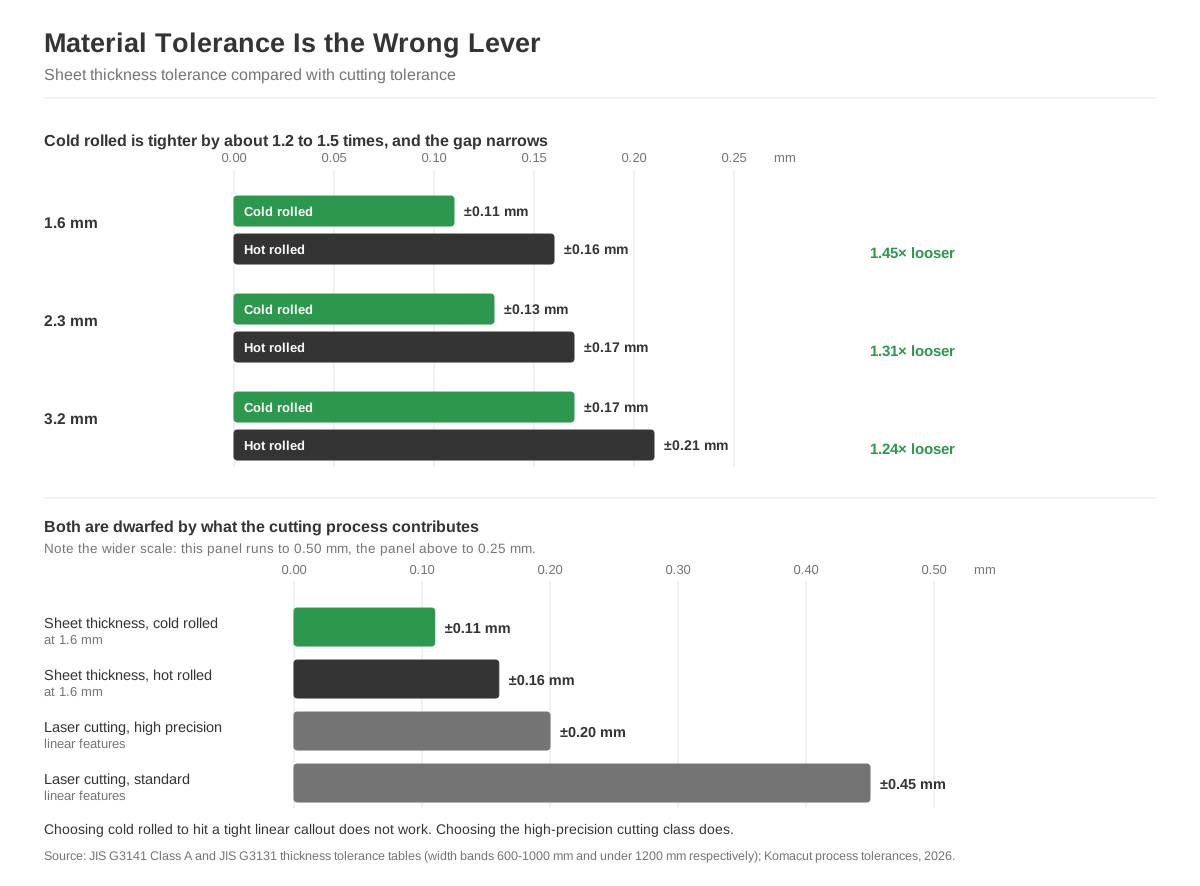
So now you can see why rolling is only part of the equation. At 1.6 mm, the entire gap between cold rolled and hot rolled thickness tolerance is 0.05 mm. Standard laser cutting is ±0.45 mm, nine times that gap on its own. Even high-precision cutting at ±0.20 mm is four times it. If you need to hit a ±0.2 mm linear tolerance, you won't achieve it just by specifying cold rolled, but you will by using high-precision cutting. Our sheet metal tolerances guide goes into more detail and breaks it down by feature.
There are cases where the material choice really does drive tolerance. Machined or mating faces, press-fit hardware seats, and anywhere sheet gauge variation stacks across an assembly: in those, specifying the right material does real work.
Why and How Mill Scale Gets Removed
Mill scale has a distinct look to it, but it's not just a cosmetic feature. It is electrochemically cathodic to the steel it covers, which means any break in the layer will accelerate corrosion at the exposed spot. It can be painted over, but when the scale chips off the paint will come off with it.
Mill scale can't just be wiped off, either. Removing it properly is a specified operation: SSPC-SP 10 (Near-White Blast) requires the surface to be free of all visible mill scale, rust, oxides and foreign matter, permitting random staining on no more than 5% of each unit area. That means an abrasive blast line, which adds cost and lead time, and on thin parts it can move dimensions too.
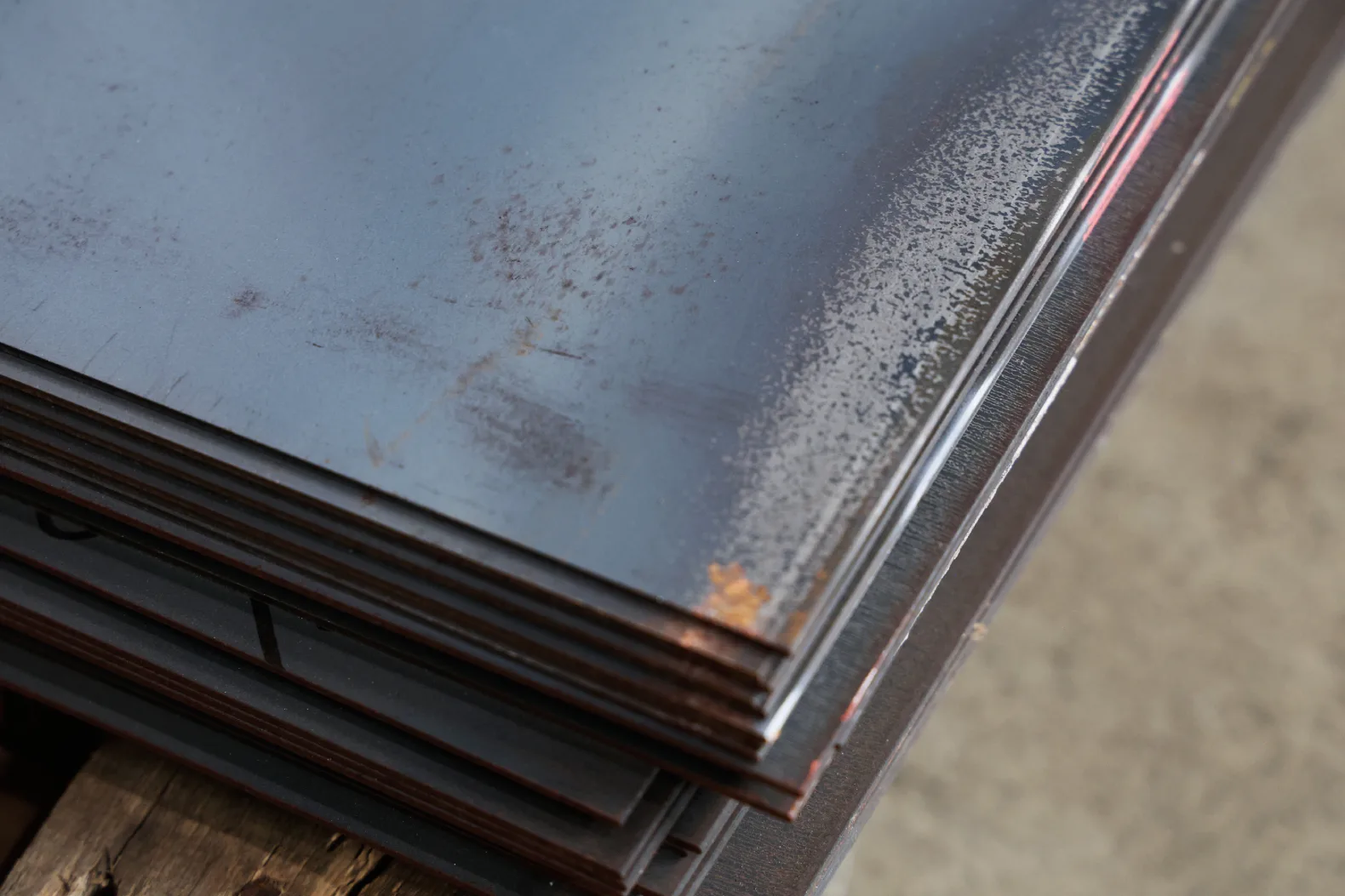
There is a middle ground, though. Instead of blasting the scale off hot rolled steel or paying for cold rolled, you can specify hot rolled pickled and oiled (HRPO). According to Kloeckner Metals, this is a three-part procedure. First, the steel is hot rolled. Then it gets run through a hydrochloric acid bath to strip away the scale. Finally, the producer applies a protective oil film to the sheet's surface. The result is a sheet with a scale-free surface that can be coated and welded, but at a price closer to hot rolled than cold rolled. It's also easier to work with because it hasn't been work hardened. HRPO is usually the best choice for making thicker painted parts (e.g., 3 mm brackets, enclosure baseplates, weldment components).
If your part needs to be anodized, plated, or powder coated, your best bet will almost always be cold rolled or HRPO (unless you're willing to pay for blasting).
Which Cold Rolled and Hot Rolled Grades Can You Actually Order?
Which grades are available depends on where the part is made. Komacut's standard material offering is based on location:
China Facility (Metric Grades)
| Grade | Process | Yield (MPa) | Tensile (MPa) | Standard |
|---|---|---|---|---|
| SPCC | Cold rolled | ≥210 | ≥350 | JIS G3141 |
| Q235 | Hot rolled | ≥235 | 375–500 | GB/T 700 |
| Q275 | Hot rolled | ≥275 | 410–540 | GB/T 700 |
| Q355 | Hot rolled | ≥355 | 470–630 | GB/T 1591 |
| SAPH440 | Hot rolled | ≥305 | ≥440 | Automotive structural |
North America Facility (Imperial Gauges)
| Grade | Process | Yield (MPa) | Tensile (MPa) |
|---|---|---|---|
| A366 | Cold rolled | ≥180 | ≥303 |
| A715 | Cold rolled | ≥340 | ≥410 |
| A36 | Hot rolled | ≥250 | ≥400 |
| A572 | Hot rolled | ≥345 | ≥448 |
Note that A366 was withdrawn in 2000 and replaced by ASTM A1008, so yield and tensile figures for it are supplier values, not specification minimums.
As discussed above, material grade matters more for strength than the rolling process. For instance, A715 has ≥340 MPa yield, which outperforms the ≥250 MPa yield of A36 hot rolled.
Parts that are sourced from our Mexico facility can ship duty-free to the US and Canada under the USMCA agreement. Given current tariff levels, this can have a bigger impact on your steel part's landed cost than the premium paid for cold rolled.
Cost Difference Between Hot Rolled and Cold Rolled Steel
Cold rolled coil consistently trades at higher values than hot rolled coil. Steel Market Update put the spread at $305 per short ton in March 2024 (compared to an average of $210/st in 2023 and a peak near $570/st in 2022). At those 2024 rates, that's a 38% premium for cold rolled based on the raw coil, call it 25 to 40% in normal conditions.
So does that mean hot rolled is the cheaper option? Not necessarily. If you're weighing options for a fabricated part, there are other factors that can tip the balance.
If you're ordering a prototype or a low-volume run for a laser-cut and bent part, the material is only a small portion of the cost. The setup, programming, press brake tooling changes, deburring, finishing, and freight expenses are the major contributors. If you're ordering 25 brackets, opting for Q235 instead of SPCC will only make it negligibly cheaper. You're shaving off a fraction of the cost on an expense that's already a small fraction of the total price. If you look at Komacut's volume pricing, the cost per piece drops 40–65% when you go from 25 pieces to 2,500, not because the materials get cheaper, but because the setup cost gets amortized across each unit.
At higher volumes, it's different. If you're ordering thousands of units per year, now the price is driven largely by the materials. In this case, if the coil comes with a 30% premium, it's worth engineering around it (if possible). If you can switch to HRPO (to keep the coatable surface) instead of cold rolled, you'll see a real difference in the total cost.
Our rule of thumb is 500 units. If your volume is lower than that, pick the best material for the part. If it's higher, run the numbers to see if swapping materials makes more sense.
Hot Rolled vs. Cold Rolled Decision Checklist
- Under 1.2 mm → cold rolled.
- Over 3.2 mm → hot rolled or HRPO.
- Painted or visible surface → cold rolled (or HRPO if you need thicker sheet).
- Hidden structural, welded, or unpainted surface → hot rolled.
- Tight bends (1× thickness) → hot rolled (or a drawing-quality CR grade) and bend across the grain.
- Guaranteed yield strength → specify a structural grade (Q355, A572, SS Grade 50).
- Tolerance within ±0.2 mm on cut features → change the cutting tolerance class (not the material).
The easiest way to pick for a specific part?
Upload your STEP file to Komacut and you'll get an instant quote with automated DFM feedback. Switch between SPCC and Q235 in the material dropdown and see the cost difference for your actual geometry and quantity.
Instant DFM Checking
Try Komacut's instant quotation tool
Upload your STEP file, switch between SPCC and Q235 in the material dropdown, and see the real cost difference for your part and quantity in about 30 seconds.
Frequently Asked Questions
Is cold rolled steel stronger than hot rolled steel?
Not always. Cold rolling work-hardens the material, but grade makes a bigger difference than the rolling method. Hot rolled Q355 has a minimum yield of 355 MPa against 210 MPa for cold rolled SPCC, making it 69% stronger. Specify by grade rather than assuming cold rolled wins.
Can hot rolled steel be powder coated?
Yes, but only after the mill scale is removed, usually by abrasive blasting to a standard such as SSPC-SP 10, or by using pickled and oiled (HRPO) sheet instead. Powder applied over mill scale will delaminate as moisture penetrates beneath the oxide layer.
Why is cold rolled steel more expensive?
It takes every step hot rolling takes, then adds more: acid pickling to strip the scale, a second rolling pass at room temperature, and usually annealing to restore formability. That extra processing is why the price gap averaged $210 per short ton in 2023 and $305/st in early 2024.
What thickness does cold rolled steel come in?
Preferred stock thicknesses under JIS G3141 run 0.4 to 3.2 mm: 0.4, 0.5, 0.6, 0.8, 1.0, 1.2, 1.6, 2.0, 2.3, 2.5, 2.8 and 3.2 mm. The standard covers up to 6 mm, but above 3.2 mm you are off the preferred list, and hot rolled or HRPO is usually more practical.
Does cold rolled steel rust faster than hot rolled?
Both rust readily; neither resists corrosion uncoated. Cold rolled ships with a light protective oil that delays surface rust in storage. Hot rolled's mill scale offers no reliable protection and actively speeds up corrosion wherever the layer is broken, because scale is cathodic to the steel beneath.
What is HRPO steel and when should I use it?
HRPO is hot rolled coil that has been acid-descaled and given a protective oil film. It takes paint and welds like cold rolled, but prices close to hot rolled. Specify it for painted parts above 3 mm that don't need full cold rolled tolerances.